Column: Hunger games on Guam’s reefs

Reef Awareness Day Article Schills 1

World Reef Awareness Day on Tuesday provides a great opportunity to spotlight the unique natural heritage of Guam’s reefs and the strong cultural connection of the CHamoru people to this valuable resource.
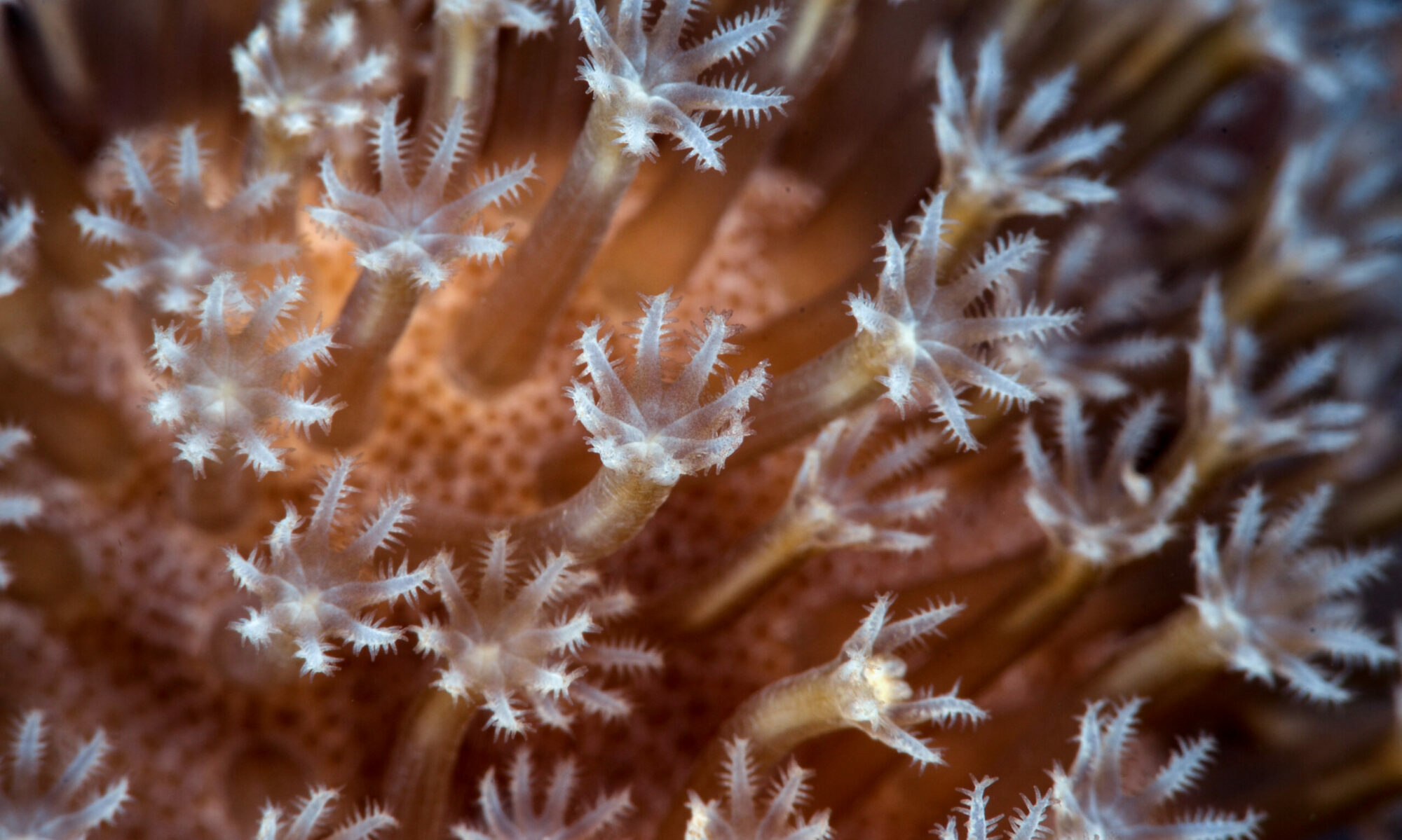
In recent months, juvenile rabbitfish (mañahak) have traveled from various Micronesian islands to Guam and are now quarantining on the island’s reef flats. Much like our own children, these youngsters have an insatiable appetite and can curtail seaweed gardens on reefs where they couch surf.

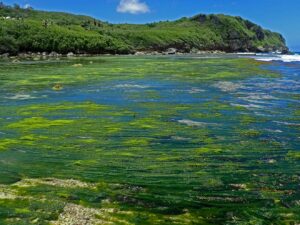
In Pago Bay, extensive stands of the angel hair seaweed, a species that has been proliferating on Guam’s reefs since 2012, have now been decimated by these rabbitfish. This is a fine example of the biological control of a nuisance species without human assistance.

Reef Awareness Day Article Schills 1
Bloom of angel hair seaweed in Pago Bay photo courtesy of Tom Schils

Stonefish in seaweed camo

Mañahak are not picky eaters and they happily feast on the diversity of seaweeds that reefs have to offer. The impact of the rabbitfish raid was striking when I was desperately searching for seaweed during a recent field trip in Pago Bay.

When a boulder generously covered with bright green tufts of seaweed caught my eye, I thought I had struck gold. While plucking off these tufts, the boulder suddenly aroused and charged off at a whipping speed. The two eyes on the boulder glanced back and I realized that this huge stonefish had capitalized on the existing food scarcity by using seaweed camouflage to deceive its rabbitfish prey.

Reef Awareness Day Article Schills 2
Rabbitfish feasting on angel hair seaweed

Mass spawning

Some seaweeds are untouchable by grazing fish. Vivid green clumps of turtleweed (Chlorodesmis fastigiata) stand out on reefs but are not targeted by herbivorous fish because they contain toxins.

Like rabbitfish, turtleweed releases offspring en masse when the conditions for their survival are optimal. Rabbitfish runs have evolved into seasonal events that coincide with the main growing season of seaweeds.

Reef Awareness Day Article Schills 3.0
The poisonous turtleweed courtesy of Tom Schils

Turtleweed is more selective in timing its reproduction. Episodes of mass spawning by this seaweed occur when bare patches of reef become available in the aftermath of storm events. At that point, turtleweed is fully committed to reproduction and the whole seaweed is converted into reproductive cells after which the parent plant dies.

Faking a poisonous appearance

The camouflage trick of stonefish is topped by the disguise-by-resemblance (mimicry) strategy of the Piti Bomb Holes seaweed (Rhipilia coppejansii). Guam is home to several species of Rhipilia, which all form distinctive spongy blades.

The Piti Bomb Holes seaweed is only found on Guam and is unique in forming green tufts of loose filaments that resemble turtleweed. The chemical composition of the Piti Bomb Holes seaweed is as of yet unknown, but its apparent similarity to poisonous turtleweed might ensure its survival on reefs where herbivores abound.

Reef Awareness Day Article Schills 3
Piti Bomb Holes Seaweed, a turtleweed look-a-like photo courtesy of Tom Schils

Cultural traditions

Humans have become part of the natural dynamics on reefs. The mañahak season brings people together while catching, processing or feasting on this seasonal culinary delight. Observant fishermen are the first to witness the changes that are taking place on reefs. They have already adapted by using the overly abundant angel hair seaweed as fishing bait or as a crispy and tasty additive to salads.

Even in this day and age of magnificent nature documentaries and well stocked grocery stores, it remains important to celebrate and perpetuate cultural traditions that are deeply rooted in the island’s natural heritage. After all, such activities allow us to evaluate the health of our ecosystems and find solutions for environmental issues specific to Pacific islands.

Tom Schils is an EPSCoR Researcher and a professor of marine biology at the University of Guam with a research focus on the diversity and ecology of seaweeds in the tropical Pacific. He can be reached at 735-2185 or tschils@triton.uog.edu.

UOG study: Light, in addition to ocean temperature, plays role in coral bleaching

5R5A8743

A study by University of Guam researchers has found that shade can mitigate the effects of heat stress on corals. The study, which was funded by the university’s National Science Foundation EPSCoR grant, was published in February in the peer-reviewed Marine Biology Research journal.

“We wanted to see what role light has in coral bleaching,” said UOG Assistant  Professor and EPSCoR Co-PI Bastian Bentlage, the supervisor and co-author of the study. “Usually, people talk about temperature as a cause for bleaching, but we show that both light and temperature work together.

Previous UOG research led by EPSCoR Lead Researcher Laurie J. Raymundo found that more than one-third of all coral reefs in Guam were killed from 2013 to 2017 over the course of multiple bleaching events. Coral bleaching is the process in which corals stressed by environmental changes expel the essential symbiotic algae that live in their tissues, causing them to turn white and often die.

This latest study examined the resilience of staghorn corals (Acropora cf. pulchra) in heightened seawater temperatures. This species of coral is one of Guam’s dominant reef-builders, and its habitats experience temperatures up to 97 degrees Fahrenheit during the hottest months of the year, leaving it vulnerable to bleaching episodes and population decline.

A team of researchers — including lead author Justin T. Berg, a UOG graduate student and EPSCoR Graduate Research Assistant (GRA) studying biology; Charlotte M. David, an undergraduate student from the University of Plymouth (England), and Melissa Gabriel, a UOG graduate student and EPSCoR GRA studying environmental science — took coral samples from the Hagåtña reef flat and examined their health in the UOG Marine Laboratory under normal and elevated temperatures.

“One group was subjected to consistent baseline temperatures observed on Guam’s reef flats,” Bentlage said, “and another was set to temperatures that are projected to become the new normal over the next couple of decades.”  

The researchers found that the corals took three weeks to recover from a week-long heat stress event. The experiment was then replicated to see how the corals would react if they were given shade while subjected to warmer temperatures.

“We found that when we put the shading over coral with increased seawater temperatures, it greatly increased photosynthetic yield of the symbiotic algae. Shade made a huge difference for coral health when you have high temperatures,” Berg said.

Implications for reef management

Shading is a practice already used in coral nurseries, Bentlage said, but it may not be practical to shade whole reefs in the ocean. Future studies can look into practical ways to reduce the impact of light on corals, particularly as they recover from periods of elevated temperatures.

“We saw the corals recover rather slowly,” Berg said. “The length of recovery indicates that corals are vulnerable during this time and management efforts may be particularly necessary during this period to reduce coral mortality.” 

Berg said the new knowledge may also help inform the best locations to successfully outplant corals.

“For example, slightly turbid waters could provide some shading to corals, making them less likely to bleach during periods of elevated sea surface temperatures,” Berg said.

2021 coral shading study 1
Staghorn corals in the reef flat off Hagåtña appear bleached as a response to stress from environmental changes. As one of Guam’s dominant reef-builders whose habitat experiences temperatures up to 97 degrees Fahrenheit, this species was used in a University of Guam study published in February that found that shade can mitigate the effects of heat stress on corals.

University of Guam secures $20 million to expand coral research

2019 uog biorepository kelokelo web
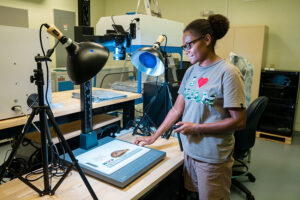
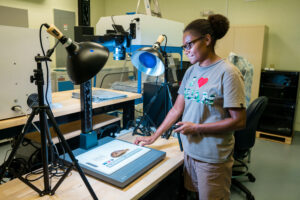
Mildred Kelokelo, a graduate biology student at the University of Guam, documents a reef fish using equipment in the University of Guam Biorepository in 2019. The biorepository, established under the five-year Guam Ecosystems Collaboratorium grant project, is an online-accessible collection of specimens facilitating marine biodiversity research.

The University of Guam has been awarded $20 million to expand its research capabilities on coral reef survival in rapidly changing environmental conditions. The five-year grant is from the National Science Foundation’s Established Program to Stimulate Competitive Research, more commonly referred to as EPSCoR, and will considerably expand upon work undertaken during the previous five-year, $6 million Guam EPSCoR grant project, the Guam Ecosystems Collaboratorium.
“This is a major grant award which not only validates and expands on the research work of Guam EPSCoR, our Marine Laboratory, and our partners, but it also further establishes the University of Guam as an emergent research institution in the Pacific region,” said UOG President Thomas W. Krise.

Starting July 1, the new grant project — titled the Guam Ecosystems Collaboratorium for Corals and Oceans, or GECCO — will increase the collection, documentation, integration, and analyses of complex genetic and oceanographic data from reefs within the region. These research activities are necessary to understand the evolutionary and ecological processes that drive resilience in coral reefs under stress from climate change and other factors and could provide valuable insight into the development of
viable management strategies.

Dr. Terry J. Donaldson, professor of ichthyology at the UOG Marine Laboratory and the principal investigator and project director, said the need for modern, cutting-edge studies on reef ecosystems is urgent.

“Island communities of the Western Pacific and all around the world depend on coral reef ecosystems, but the reefs are struggling to survive amid our rapidly changing climate,” he said. “Guam has the nation’s most diverse and complex coral reefs, so the UOG Marine Lab is the best place to do this research and inform how we can better protect this vital ecosystem.”

Data collection

The research team, led by Dr. Bastian Bentlage, assistant professor of bioinformatics at the Marine Lab, will collect and analyze genetic, genomic, oceanographic, and ecological data sets. New collections of marine biodiversity from the region will be curated, imaged, and mapped, and specimens — including cryo-preserved tissues for genomics research — stored in the UOG Biorepository along with historical collections dating back more than 50 years. Specimens and field collection data will be digitized and posted in the biorepository’s online-accessible database that was established during the Guam Ecosystems Collaboratorium, providing the scientific community with an invaluable resource for marine biodiversity research.

Big-data analyses

Mathematical models will use the data gathered to better predict changes in our reef ecosystems. To facilitate this ambitious research project, UOG’s ability to conduct big-data analyses will be expanded by establishing a high-performance computing cluster on its campus and by strengthening its collaborative network with other research institutions.

Techniques and technology

The new grant will utilize cutting-edge instrumentation and innovative techniques, including:

  • hyperspectral scanning to automate mapping of reef communities;
  • DNA barcoding to facilitate identification of reef organisms, including coral microbiomes, and their role in the stress response of coral reefs;
  • seascape genomics, integrating genomics, and oceanographic modeling to trace connectivity between coral reefs within the region; and
  • micro-CT scanning techniques within the Biorepository to further the understanding of the morphology of marine organisms on reefs and promote a greater understanding of their taxonomic diversity.

“Coral reefs in the Marianas Archipelago are some of the most diverse ecosystems in the world, and Guam represents the United States’ only foothold in the region. This award provides researchers the opportunity to explore these coral reef systems and understand current biodiversity challenges concerning how they respond to climate change,” said NSF EPSCoR Program Manager John-David Swanson. “In addition to improving infrastructure in the jurisdiction, this project aims to target underserved communities and develop innovative programs for STEM education and workforce development.” 

Education and collaboration

The grant will grow UOG’s research capacity by funding new and visiting faculty positions and post-doctoral fellowships to conduct research, teach specialized courses at the university, and engage graduate and undergraduate students in research.

Beyond research, the GECCO project will develop innovative STEM education and community engagement programs — an effort that will led by Dr. Austin Shelton, assistant professor of extension and outreach — and collaborations within the national and international research communities, an effort that will be led by Dr. Rachael Leon Guerrero, vice provost for research and sponsored programs.

Link to original article: https://www.uog.edu/news-announcements/2019-2020/2020-university-of-guam-secures-20-million-to-expand-coral-research.php

University of Guam secures $20 million to expand coral research

2019 uog biorepository kelokelo 2
2019 uog biorepository kelokelo 1 2

The University of Guam has been awarded $20 million to expand its research capabilities on coral reef survival in rapidly changing environmental conditions. The five-year grant is from the National Science Foundation’s Established Program to Stimulate Competitive Research, more commonly referred to as EPSCoR, and will considerably expand upon work undertaken during the previous five-year, $6 million Guam EPSCoR grant project, the Guam Ecosystems Collaboratorium. 
“This is a major grant award which not only validates and expands on the research work of Guam EPSCoR, our Marine Laboratory, and our partners, but it also further establishes the University of Guam as an emergent research institution in the Pacific region,” said UOG President Thomas W. Krise.

Starting July 1, the new grant project — titled the Guam Ecosystems Collaboratorium for Corals and Oceans, or GECCO — will increase the collection, documentation, integration, and analyses of complex genetic and oceanographic data from reefs within the region. These research activities are necessary to understand the evolutionary and ecological processes that drive resilience in coral reefs under stress from climate change and other factors and could provide valuable insight into the development of viable management strategies.

Dr. Terry J. Donaldson, professor of ichthyology at the UOG Marine Laboratory and the principal investigator and project director, said the need for modern, cutting-edge studies on reef ecosystems is urgent.

“Island communities of the Western Pacific and all around the world depend on coral reef ecosystems, but the reefs are struggling to survive amid our rapidly changing climate,” he said. “Guam has the nation’s most diverse and complex coral reefs, so the UOG Marine Lab is the best place to do this research and inform how we can better protect this vital ecosystem.”

The research team, led by Dr. Bastian Bentlage, assistant professor of bioinformatics at the Marine Lab, will collect and analyze genetic, genomic, oceanographic, and ecological data sets. The research team consists of Dr. David Combosch (genetics), Dr. Atsushi Fujimura (oceanography), Dr. Sarah Lemer (genomics), Mr. David Burdick (Biorepository Collections Manager), Dr. Laurie Raymundo (coral ecology), Dr. Tom Schils (phycology), Dr. Dan Lindstrom (genetics), Dr. Leslie Aquino (modeling), Dr. Hyunju Oh (modeling), and Dr. Jaeyong Choi (statistics).

New collections of marine biodiversity from the region will be curated, imaged, and mapped, and specimens — including cryo-preserved tissues for genomics research — stored in the UOG Biorepository along with historical collections dating back more than 50 years. Specimens and field collection data will be digitized and posted in the biorepository’s online-accessible database that was established during the Guam Ecosystems Collaboratorium, providing the scientific community with an invaluable resource for marine biodiversity research.

Mathematical models will use the data gathered to better predict changes in our reef ecosystems. To facilitate this ambitious research project, UOG’s ability to conduct big-data analyses will be expanded by establishing a high-performance computing cluster on its campus and by strengthening its collaborative network with other research institutions.

The new grant will utilize cutting-edge instrumentation and innovative techniques, including:

  • hyperspectral scanning to automate mapping of reef communities;
  • DNA barcoding to facilitate identification of reef organisms, including coral microbiomes, and their role in the stress response of coral reefs;
  • seascape genomics, integrating genomics, and oceanographic modeling to trace connectivity between coral reefs within the region; and
  • micro-CT scanning techniques within the Biorepository to further the understanding of the morphology of marine organisms on reefs and promote a greater understanding of their taxonomic diversity.

“Coral reefs in the Marianas Archipelago are some of the most diverse ecosystems in the world, and Guam represents the United States’ only foothold in the region. This award provides researchers the opportunity to explore these coral reef systems and understand current biodiversity challenges concerning how they respond to climate change,” said NSF EPSCoR Program Manager John-David Swanson. “In addition to improving infrastructure in the jurisdiction, this project aims to target underserved communities and develop innovative programs for STEM education and workforce development.”

2019 uog biorepository burdick

The grant will grow UOG’s research capacity by funding new and visiting faculty positions and post-doctoral fellowships to conduct research, teach specialized courses at the university, and engage graduate and undergraduate students in research.

Beyond research, the GECCO project will develop innovative STEM education and community engagement programs — an effort that will led by Dr. Austin Shelton, assistant professor of extension and outreach — and collaborations within the national and international research communities, an effort that will be led by Dr. Rachael Leon Guerrero, vice provost for research and sponsored programs.

Guam EPSCoR research on Pago Bay published in science journal

ml pagobay oceanography team 0

The University of Guam’s Established Program to Stimulate Competitive Research (Guam EPSCoR), in collaboration with researchers from the University of Hawai’i at Mānoa-PacIOOS (UH Mānoa), were recently featured in the September 2019 edition of the Regional Studies in Marine Science Journal for their assessment of the oceanographic processes and patterns of Pago Bay.
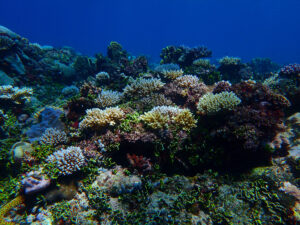
The study, “Physical Dynamics of the reef flat, channel, and fore reef areas of a fringing reef embayment: An oceanographic study of Pago Bay, Guam,” examined circulation, thermal environment, and rainstorm impacts on the coral reef system in the bay. Observations were conducted for one year, with an array of sensors deployed to measure ocean temperature, wave height, and wind speed and direction, among other variables.

“Long-term observations of oceanographic patterns and processes provide necessary context for integrative ecological studies and for assessing and mitigating anthropogenic impacts to coastal ecosystems,” according to the study.

The collaborative project between the two universities was funded primarily by Guam EPSCoR, which is supported by the National Science Foundation. Researchers in the study include Guam EPSCoR’s Dr. Terry Donaldson, principal investigator, and Dr. Atsushi Fujimura, assistant professor of oceanography and researcher, as well as Dr. Margaret McManus, Christina Comfort, Gordon Walker, and Chris Ostrander from UH Mānoa.

The full article of the study can be read at https://doi.org/10.1016/j.rsma.2019.100740.

ml pagobay oceanography team
This work was supported by the National Science Foundation, USA under Grant Number OIA-1457769 and the National Oceanic and Atmospheric Administration (NOAA), USA through PacIOOS award NA16NOS0120024.

Submit proposals for GEC Seed Funding Grant

cocos acroporase

REQUEST FOR PROPOSAL (RFP)
Guam EPSCoR’s Guam Ecosystems Collaboratorium Seed Funding Grant

Submission Deadline: September 27, 2019

Guam EPSCoR’s Guam Ecosystems Collaboratorium is seeking proposals from junior faculty members of the University of Guam for seed funding grant opportunities.
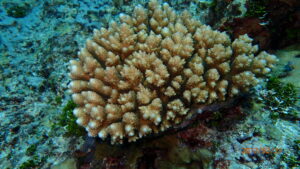
Guam EPSCoR seed funding will include experimental project costs for collaborative projects in the areas of oceanography, coral genetics, bioinformatics, genomics, coastal geological processes and sedimentation, and Integrated Digitized Biocollections (iDigBio). The grant can include travel funding for training or support that is directly linked to the implementation of research and/or advancing the competitive nature of proposed EPSCoR goals. Competitive seed funding proposals should outline how the proposed work clearly advances the research areas listed above as it is related to Guam EPSCoR strategic goals.

Multiple seed funding grant awards of up to $25,000 will be made available. Successful proposals will be selected based upon relevance to emergent science, research quality, and a demonstrated potential to achieve significant results that lead to peer-reviewed publications and future grant proposal submissions. Awardees should commit research fund expenditures by July 1, 2020, unless otherwise noted or advised. 

Applicants should submit a one- to two-page project description that includes a timeline for planning and research, an itemized budget, and budget justification no later than September 27, 2019 (1700H Chamorro Standard Time).

Submit proposals to guamepscor@gmail.com. Please use the subject line “GEC Seed Funding Y5.

For more information visit www.guamepscor.uog.edu or contact Dr. Terry Donaldson, Guam EPSCoR PI/PD, at tdonaldson@triton.uog.edu.

DOWNLOAD THE PDF VERSION OF THE RFP HERE.

Guam EPSCoR RII Track-1 LOI

p2210128 t2 18ma

GUAM EPSCOR REQUEST FOR LETTERS OF INTEREST

 The Guam EPSCoR Office will begin to prepare and submit a proposal to the National Science Foundation Established Program to Stimulate Competitive Research (NSF EPSCoR) Research Infrastructure Improvement Grant Program (RII) for funding to conduct coral reef and biodiversity research, expand and utilize cyberinfrastructure capabilities, increase opportunities in science education, outreach and diversity, promote global collaboration in the conduct of research, and expand workforce development capabilities within Guam and the region. Guam EPSCoR will solicit from individuals at the University of Guam, Guam Community College, and within the Guam community Letters of Interests for project proposals that may be integrated into the Project Core to advance the goals and objectives of the new project which are detailed further below.
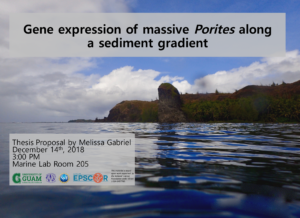
Letters of Interest are due January 14, 2019 and should not exceed 1 page in length. Submissions should be emailed to Lubuagm@uog.edu with the subject line “RII Track-1 LOI”. Letters of Interest will be reviewed by the Guam EPSCoR Office and selected participants will be invited to an initial planning meeting on January 18, 2019.

GOALS AND OBJECTIVES

Emerging science: Resilience is the ability of individuals, populations, and communities to persist after disturbances, returning to their original state. Both global and local stressors affect corals at the level of individuals, at the population level through demography and selection, and at the community level by shifts in species composition toward more resilient species. Climate change increases sea surface temperatures and decreases seawater pH, which affects coral health, leading to a breakdown of the coral-photosymbiont association (coral bleaching) and reduced calcification and growth rates. Historically, coral reef management focused on mitigating local stressors (e.g., terrestrial runoff, coastal development) (National Academies of Sciences, Engineering, and Medicine 2018). Corals already under stress locally are likely to respond differently to the addition of global stressors than unperturbed corals.

The recent research review on coral reef persistence and resilience published by the National Academies of Sciences, Engineering, and Medicine (2018) identified coral resilience as the result of responses at the individual, population, and species level. The research of the current EPSCoR RII Track-1 project falls under this umbrella (see background below). With the next proposal, we intend to grow this theme and build on the investments that have been made in this area at the University of Guam (UOG) with the goal of laying the foundation for the Guam Marine Science Research Center (GMSRC) at UOG. Our vision is to establish the GMSRC and make UOG the premier institution for marine and biodiversity research while promoting excellence in student training and greater collaboration with scholars and institutions worldwide.

The theme for the next NSF EPSCoR RII Track-1 proposal will be centered on describing, understanding, and predicting the effects of global climate change on coral reef ecosystems in Guam and the broader Micronesian region across multiple spatial and temporal scales. Ecosystems may be understood broadly to encompass those systems that interface with coral reefs.

Activities proposed for the next request for funding through NSF EPSCoR should align with:

  • The following of NSF’s 10 Big Ideas:
    1. Understanding the rules of life
    2. Harnessing the data revolution
    3. Growing convergence research
    4. Developing mid-scale research infrastructure
    5. NSF INCLUDES
  • The report by the Committee on Interventions to Increase the Resilience of Coral Reefs (National Academies of Sciences, Engineering, and Medicine 2018)
  • The Guam Coral Reef Resilience Strategy (Guam Coral Reef Initiative, 2018)
  • NSF’s iDigBio program for the digitization of biodiversity collections

Building for the future: The establishment of a Guam marine science research center at the University of Guam is a primary goal for the development of research capacity on Guam.  This center would include construction of a new Marine Laboratory building and the Biorepository Research Collections Building.  The existing Marine Laboratory main building would be remodeled to create additional laboratory and office spaces to accommodate new and visiting researchers. The goal is for this new UOG facility to be designated as an NSF-funded National Research Center for coral reef and biodiversity studies.  Construction costs will be met by various grants and leveraged funding, with matching funds (20%) from the NSF EPSCoR RII Track-1 (2020-2025) grant devoted towards the construction of the Biorepository building. NSF EPSCoR funding will be used to equip this building and to enhance relevant existing and new laboratories within the new research center.

Rationale

Guam and the broader region depend on coral reefs. Our reefs host a diverse biota, provide coastal protection, economic stability in a tourism-based economy and ensure food security in the region by supporting local fisheries. Climate change is predicted to have severe impacts on coral reefs and in turn will have lasting effects on the ecosystem services provided by these reefs; this will have profound and lasting impacts on societies across the region. Managing local reef stressors remains an important task but is unlikely to ward off the impacts of global climate change, increasing sea surface temperatures, and changing ocean chemistry. Global coral bleaching events are predicted to occur annually by 2050 and are likely to lead to wide-spread and persistent reef declines (Frieler et al., 2013). The reliance of humans on an ecosystem at risk of collapse requires understanding the mechanisms of coral reef responses to a changing climate and their possible adaptation to changing conditions (cf., National Academies of Sciences, Engineering, and Medicine 2018). Predicting the scale of expected impacts of coral reef decline will be necessary to develop meaningful intervention strategies to mitigate biodiversity loss and impacts of coral reef declines on our society.

Marine genomics and oceanography will play central roles in developing the research theme for the next proposal, building on the previous research efforts and investments in infrastructure made under the current NSF EPSCoR RII Track-1 award – faculty and post-doctoral fellow hires, development of the Biorepository to document biodiversity and house biological tissue collections, significant upgrades in our capacity for molecular genetics research, oceanographic equipment, and computational infrastructure.

Dispersal patterns and environment associations of individual species, populations and communities of reef organisms can describe and explain present-day diversity while also providing the foundation for predicting the future diversity of coral reefs. A better understanding of the impacts of changing reef ecosystems will require development and implementation of analytical methods that cross disciplinary boundaries (e.g., integrating existing ecological monitoring data, population ecology, oceanography, and mathematics). Understanding the mechanisms of acclimatization and adaptation of reef organisms to a changing climate has the potential to inform mitigation and remediation strategies. The latter creates direct links to restoration efforts already underway in Guam and promotes research into ecological engineering solutions to mitigate impacts of climate change (e.g., selecting appropriate sites, species, individuals for restoration; restoration informed by a mechanistic understanding of coral regeneration and growth).

While climate change has direct effects on reefs, its effects on terrestrial ecosystems fit under the theme of the next proposal, as changes in terrestrial ecosystems may exert pressures on reef systems (e.g., declines in vegetation leading to erosion; spread of alien species that lead to destabilization of native ecosystems). Considering the dependence of Guam and the broader region on reefs for economic stability, studies that investigate effects of predicted climate change on human populations and the economy may potentially fit under this umbrella as well (e.g., predicting the effects of climate change on the migration of people).

The UOG Biorepository is tasked with documenting the biodiversity of Guam and the broader region, and bringing collections and their management into the 21st century by employing protocols, techniques and tools promoted by the NSF-funded iDigBio project (www.idigbio.org). Biorepository activities in the new project will include the following:

  • Richard H. Randall Coral Collection: curation, digitization, imaging and long-term storage
  • Rebuilding the Richard Dickinson Memorial Mollusk Collection: collection, curation, digitization, imaging and long-term storage
  • Rebuilding the Collection of Fishes: collection, curation, digitization, imaging and long-term storage
  • Barcoding marine fishes of the Mariana Islands: intertidal to mesophotic coastal species with an analysis of their biogeographical relationships
  • Barcoding insular freshwater and estuarine fishes of Micronesia with an analysis of their biogeographic relationships
  • Rebuilding the Collections of Invertebrates: collection, curation, digitization, imaging and storage

PROJECT ELEMENTS IN SUPPORT OF RESEARCH ACTIVITIES

Cyberinfrastructure Development

Development and implementation of strategies and networks to increase research capacity.

Education, Outreach and Diversity (EOD), and Workforce Development

Between 2020-2025, Guam EPSCoR proposes to expand Education, Outreach, and Diversity (EOD) activities in the Guam Ecosystems Collaboratorium. The “Guam Green Growth” or G3 Initiative will be established. G3 will build capacity and develop the local workforce in four (4) NICE areas, further stimulating Guam’s competitive research capabilities. The G3 initiative will contribute to creating a new sustainable green economy for the jurisdiction, which has traditionally been supported by tourism and government spending.

  1. N- Natural Resources: Guam EPSCoR has demonstrated success in building capacity to support the understanding and management of the jurisdiction’s natural resources amid global environmental changes. Guam EPSCoR supported dozens of graduate research assistantships (GRAs) and summer research experiences (SREs) for undergraduates in the marine and environmental sciences. Educational outreach activities extend the science of the Guam EPSCoR to thousands more in the community. The NSF INCLUDES Pilot: Growing STEM, leverages the success of Guam EPSCoR’s EOD activities and creates a pathway from high school to terminal STEM degrees for Pacific Islander students. These efforts to build capacity for improved understanding and management of natural resources will continue in the new EPSCoR initiative.
  2. I- Information Technology: The Guam Science & Technology Committee indicated that Guam needs to build capacity in information technology to support the booming telecommunications industry. Guam EPSCoR will support internships and training opportunities such as coding camps. Guam EPSCoR will coordinate efforts with Silicon Village, an organization of telecommunications professionals working together to address capacity needs.  Guam EPSCoR will build scientific interest and understanding throughout the community by contributing to the establishment of Guam’s first and only STEM Center. The center will be created in a former NASA Apollo tracking station that the U.S. Navy is expected to lease to the University of Guam. A Challenger Learning Center (www.challenger.org) will be a core feature of the center to take participants on a simulated Marianas Trench mission. Guam NASA EPSCoR resources will be leveraged for this effort.
  3. C-Circular Economy: Guam EPSCoR will spark the creation of a circular economy in the jurisdiction to improve island sustainability. Circular Economy principles are 1) design out waste and pollution, 2) keep products and materials in use, and 3) regenerate natural systems. Guam relies heavily on imports to meet the needs of society. Over 100,000 shipping containers arrive at the Port of Guam each year, while nearly 15,000 barrels of petroleum products are used each day. As the island has limited space to continue digging holes to create new landfills, improved waste reduction and management strategies are crucial. Circular Economy concepts will be stimulated throughout the community. Examples of circular economy initiatives include, converting green waste into compost, waste to energy, food waste to animal feed, aquaponics, and harnessing renewable energy (sun, wind, and ocean).
  4. E- Energy Independence: Guam EPSCoR will build capacity for the jurisdiction in new renewable energy technologies, microgrid technologies, and energy policy. New UOG partnerships with the Arizona State University’s Global Institute of Sustainability and School of Engineering will be leveraged to stimulate action for energy independence in Guam and the broader Micronesia region. Guam EPSCoR will support a new faculty line in engineering/planning/sustainable development to lead these efforts. 

Partners of this effort will include the Guam Economic Development Authority, UOG Center for Island Sustainability, UOG Sea Grant, UOG Office of Information Technology, UOG School of Business and Public Administration, Bank of Hawaii Center for Entrepreneurship and Innovation, Small Business Development Centers throughout Micronesia, Silicon Village, Guam Power Authority, Guam Solid Waste Authority, and Arizona State University Global Institute of Sustainability.

Through EOD and Workforce Development initiatives, Guam EPSCoR will be a leader for informing policy, building local STEM capacity, and implementing solutions to island challenges.

The Collaboratorium: promotion of international research collaborations.

PROPOSED ADDITIONAL COMPONENTS OF THE NEW PROJECT

Guam EPSCoR encourages the submission of Letters of Interest for proposals that may be integrated into the core project from the following suggested areas of research, development and engagement:

  • Ocean acidification and responses by reef organisms
  • Coral health under stress
  • The role of algae in the resilience and maintenance of reef systems
  • Changing reefs and changing peoples in Micronesia
  • Remote sensing and reef research
  • Robotics and reef research
  • Diatoms of Micronesia (Biorepository collections)
  • Terrestrial and Marine Insects of Micronesia (Biorepository collections)
  • Flora of Micronesia in the University of Guam Herbarium (Biorepository collections)
  • Marine Flora of Micronesia in the UOGML collection (Biorepository collections
  • Promoting scientific research opportunities at the community college level
  • Other proposed activities will be considered in relation to their relevance to the core project

RESEARCH BACKGROUND

Research under the current EPSCoR RII Track-1 grant relies on genomic and oceanographic tools to study coral reef resilience under the following paradigm: Coral resilience is the result of responses at the individual, population, and species level.

Our aim is to understand and describe the mechanisms of resilience in corals in the face of global and local stress, with coral bleaching being our focal global stressor. Local stressors investigated in our projects include terrestrial runoff caused by a poor watershed usage (recurrent arson wildfires and popular off-roading activities) and coastal development (pollution and tourism). Identifying mechanisms of resilience has the potential to incorporate/engineer resilience into mitigation strategies. For example, Guam Ecosystem Collaboratorium (GEC) researchers work on examining the genetic diversity of corals reared in Guam’s coral nursery for restoration purposes. Linking population genetics to environmental tolerances of corals, for example, has the potential to select resilient individuals for reef restoration (National Academies of Sciences, Engineering, and Medicine 2018).

The overarching hypothesis above can be broken down into three components: resilience is driven by the ability of the coral holobiont to acclimate to stress; differences in population resilience are driven by connectivity and local adaptations; and interspecific differences in resilience are shaped by species-specific traits and responses to environmental stress.

  1. Resilience is driven by the ability of the coral holobiont to acclimate to stress.
    • Acclimation to stressors comes at an energetic cost, affecting the health of the coral holobiont. To address this issue, we use gene expression to investigate the response of the coral holobiont to bleaching stress across a depth gradient in Pago Bay, relying on oceanographic data collected from a subset of the Pago Bay sensor network to identify micro-habitat differences, (a clear link between oceanography and genetics). Similarly, we perform gene expression experiments across a sedimentation gradient in Fouha Bay as a local stressor interacting with seasonal bleaching stress (see previous page). Further, the photophysiology of corals in these experimental systems is studied using PAM fluorometry while tissue lipid content and reactive oxygen species will be determined in collaboration with Dr. D. Baker at the University of Hong Kong, strengthening the collaborative network of the GEC.
    • Repeated exposure to stressors (and survival) promotes acclimation via cellular-level responses. Past studies have shown the importance of coral’s thermal history in aiding acclimatization, increasing capacity for mitigating cellular-level stress (Weis, 2010). In fact, corals that were periodically subjected to a specific stress, such as high temperatures, have shown that they can acquire a higher resilience toward this particular stress in the future (Putnam and Gates 2015, Brown et al. 2002, Brown and Cossins 2011).  We are investigating coral acclimation capabilities and mechanisms of genetic plasticity through gene expression and epigenetic studies. For example, we are documenting a rapid acclimation response of the coral holobiont to heat stress, using gene expression in controlled experiments and in parallel possible long-term acclimation via epigenetic mechanisms. Since acclimation may vary across individuals and species, experiments are performed on several species (genera Acropora and Porites).
    • The abiotic environment may mitigate stress and promote acclimation at different spatial scales. Water flow in particular may mitigate the impact of sea surface temperatures surpassing bleaching thresholds, as suggested by increased mortality of near-shore patches of staghorn Acropora corals during recent bleaching events in Guam (Raymundo et al. 2017). Building on this observation, we sampled staghorn Acropora corals from different flow environments in situ and conducted experiments in flow tanks to investigate how water flow may mitigate the rapid gene expression response that allows corals to acclimate to increased temperatures (identification of field sites and construction of flow tanks were facilitated by the GEC oceanographer); we found that increased water flow leads to gene front-loading, aiding in acclimation (Fifer 2018; Fifer et al. in prep). In collaboration with the Okinawa Institute of Science and Technology (OIST, Japan), GEC researchers measure the production of reactive oxygen species in corals exposed to thermal stress under different water flow regimes, adding relevant physiological data to our gene expression datasets. Lastly, building on the Pago Bay sensor network, reciprocal transplant experiments across depths are planned for the summer of 2019 to study the acclimation potential of Acropora surculosa originating from different micro-habitats. 
  2. Differences in population resilience are driven by connectivity and local adaptations.
    • Populations with high levels of genetic connectivity are more resilient to environmental stress. While both local and global stressors may lead to local mass mortalities, high connectivity among populations represents an important source for beneficial alleles and recruits that can promote fast recovery. Here, the GEC research team performs island-wide population genetic assessments of three Acropora and one Porites species to evaluate their recovery potential. The larval stages of different coral species may spend different lengths of time in the water column, affecting their ability to disperse. Larval dispersal potential was studied in the Marianas using a combination of sea surface current modeling based on ocean drifter data and larval transport models (Kendall & Poti 2014; Kendall & Poti 2015). Acoustic Doppler Current Profilers (ADCP) will be deployed at sites sampled for population genetics during the summer 2019 spawning season to characterize current velocities and directions at these sites. Using both the Kendall & Poti (2014, 2015) models and our smaller scale ADCP data, we will be able to discern if population genetic diversity is a result of predominantly local recruitment or recruitment from off-islands sources (e.g., the broader Micronesian region). This effort will directly link population genetics and coastal oceanography. Relying on explicit larval transport models will also allow designing sampling strategies for future population genetics research to identify source and sink populations across larger geographic scale.
    • High levels of genetic diversity across populations allows local stressors to act as environmental filters, leading to locally adapted resilient populations. Population genetic analyses of corals (genera Acropora and Porites) across environmental gradients are conducted by GEC researchers and students at multiple sites in Guam, both on the fore- and back-reef. These data allow us to detect possible allele frequency shifts across habitats. Understanding the effects of environmental filtering on coral resilience will directly impact management decisions. For example, resilience can be built into restoration efforts by identifying appropriate source colonies for specific restoration target sites. 
  3. Interspecific differences in resilience are shaped by species-specific traits and responses to environmental stress.
    • Species with higher population connectivity are more resilient than species with lower levels of population connectivity. Under 2a, we described our framework of how population connectivity affects coral resilience at the level of individual species. Comparing population genetic patterns across multiple species sampled from the same sites allows us to address if differences in genetic diversity and connectivity may (partially) explain the differences in resilience observed between different coral species on Guam
    • Resilience of coral communities is driven by community composition. Some coral communities will be more resilient than others due to differences in taxonomic composition of communities. The Pago Bay sensor network will provide the data to parameterize a numerical model of oceanographic processes in Pago Bay. The long-term coral reef monitoring project led by GEC biorepository data manager Burdick documented the bleaching and mortality of corals in Pago Bay through the 2017 bleaching event using photo-transects. Using a nested model of the larger Pago Bay oceanographic model, we will use hindcasting to evaluate if differences in coral community resilience are the result of taxonomic composition or environmental differences between sites. The coral reef monitoring project will revisit the Pago Bay transects to document recovery of coral communities and we will perform a follow-up analysis, correlating the oceanographic model with recovery rates of communities, thus co-opting and leveraging existing time-series datasets and analyses.
    • Species-specific traits explain differences in resilience between taxa. Numerous coral traits are available through the Coral Trait Database (Madin et al. 2016) and may serve as the foundation for investigating the covariation of traits and resilience established through the long-term coral reef monitoring efforts in Guam. Phylogenetic comparative methods [e.g., Felsenstein’s (1985) phylogenetic independent contrasts] represent a viable approach for investigating covariation of traits while accounting for the non-independence of species connected by evolutionary history and by extension non-independence of traits. To fully leverage existing coral trait data, it is vital to establish the identity of coral species (on Guam and elsewhere) and their relationships to each other. We will accomplish this goal using genetic barcoding and phylogenetic/ phylogenomic analyses of Guam’s coral fauna.  Comparative trait analyses will begin in Project Year 5. The specimens and notes contained in the Randall coral collection that will become part of the biorepository will be a vital resource for this effort. 

FOR MORE INFORMATION

Contact Dr. Terry Donaldson, Guam EPSCoR PI/PD at tdonaldson@triton.uog.edu or Mellani Lubuag, Guam EPSCoR Program Manager at Lubuagm@uog.edu.

The Established Program to Stimulate Competitive Research (EPSCoR) is designed to fulfill the mandate of the National Science Foundation (NSF) to promote scientific progress nationwide. A jurisdiction is eligible to participate in the NSF EPSCoR Research Infrastructure Improvement Grant Program (RII) if their most recent 3-year level of NSF research support is equal to or less than 0.75% of the total NSF Research and Related Activities (R&RA) budget. Through this program, NSF establishes partnerships with government, higher education, and industry that are designed to effect sustainable improvements in a jurisdiction’s research infrastructure, Research and Development (R&D) capacity, and hence, its R&D competitiveness.
(National Science Foundation).

REFERENCES

Brown B, Dunne R, Goodson M, Douglas A (2002) Experience shapes the susceptibility of a reef coral tobleaching. Coral Reefs, 21, 119-126.

Brown B, Cossins AR (2011) The potential for temperature acclimatisation of reef corals in the face ofclimate change. Coral Reefs: An Ecosystem in Transition. Springer.

Felsenstein J (1985) Phylogenies and the comparative method. The American Naturalist, 125:1-15.

Fifer J (2018) Examining gene expression of heat-stressed staghorn coral under differentflow environments. Graduate Program in Biology, University of Guam. M.S. Thesis.

Fifer J, Bentlage B, Lemer S, Fujimura AG, Sweet M, Raymundo LJ (in prep) Going with theflow: coral colonies in high flow environments can beat the heat.

Frieler, K., M. Meinshausen, A. Golly, M. Mengel, K. Lebek, S. D. Donner, andO. Hoegh-Guldberg. 2013. Limiting global warming to 2 °C is unlikely to save most coral reefs.
Nature Climate Change 3:165.

Guam Coral Reef Initiative. 2018. Guam Coral Reef Resilience Strategy. 68 pp

Kendall MS, Poti, M (2014) Potential larval sources, destinations, and self-seeding in theMariana Archipelago documented using ocean drifters. Journal of Oceanography, 70: 549-557.

Kendall MS, Poti M (eds.) (2015) Transport pathways of marine larvae around the MarianaArchipelago. Silver Spring, MD: NOAA Technical Memorandum NOS NCCOS 193.

Madin JS, Anderson KD, Andreasen MH et al. (2016) The Coral Trait Database, a curateddatabase of trait information for coral species from the global oceans. Scientific Data 3:160017.

National Academies of Sciences, Engineering, and Medicine (2018) A research review ofinterventions to increase the persistence and resilience of coral reefs. Washington, DC: The National Academies Press.

Raymundo LJ, Burdick D, Lapacek VA, Miller R, Brown V (2017) Anomalous temperatures andextreme tides: Guam staghorn Acropora succumb to a double threat. Marine Ecology ProgressSeries, 564: 47-55.

Raymundo LJ, Burdick D, Hoot WC, Miller RM, Brown V, Reynolds T, Gault J, Idechong J,Fifer J, Williams A (in review) Successive bleaching events cause mass mortality in Guam, Micronesia.

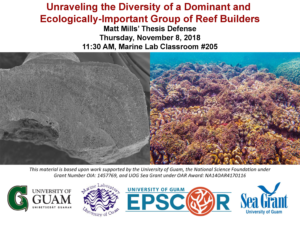
Matthew Mills Thesis Defense

00 mills thesisdefense png 1

Matt Mills

mm17

Bachelors of Science in Biology with minors in Chemistry and Spanish, Georgia Southern University, Spring 2015
Thesis: “Coralline algal diversity in Apra Harbor: a molecular approach”

Coralline algae play an important ecological role in coral reefs and are some of the most sensitive organisms to climate change and ocean acidification. Matt’s study will examine the diversity and community structure of coralline algae in Apra Harbor. Coralline algal DNA sequences will be compared to the known morphospecies of coralline algae within Apra Harbor, and community analyses will be conducted to examine coralline diversity and community composition along an established environmental gradient present throughout the harbor.