
Every great scientist can trace their journey back to someone who believed in them.
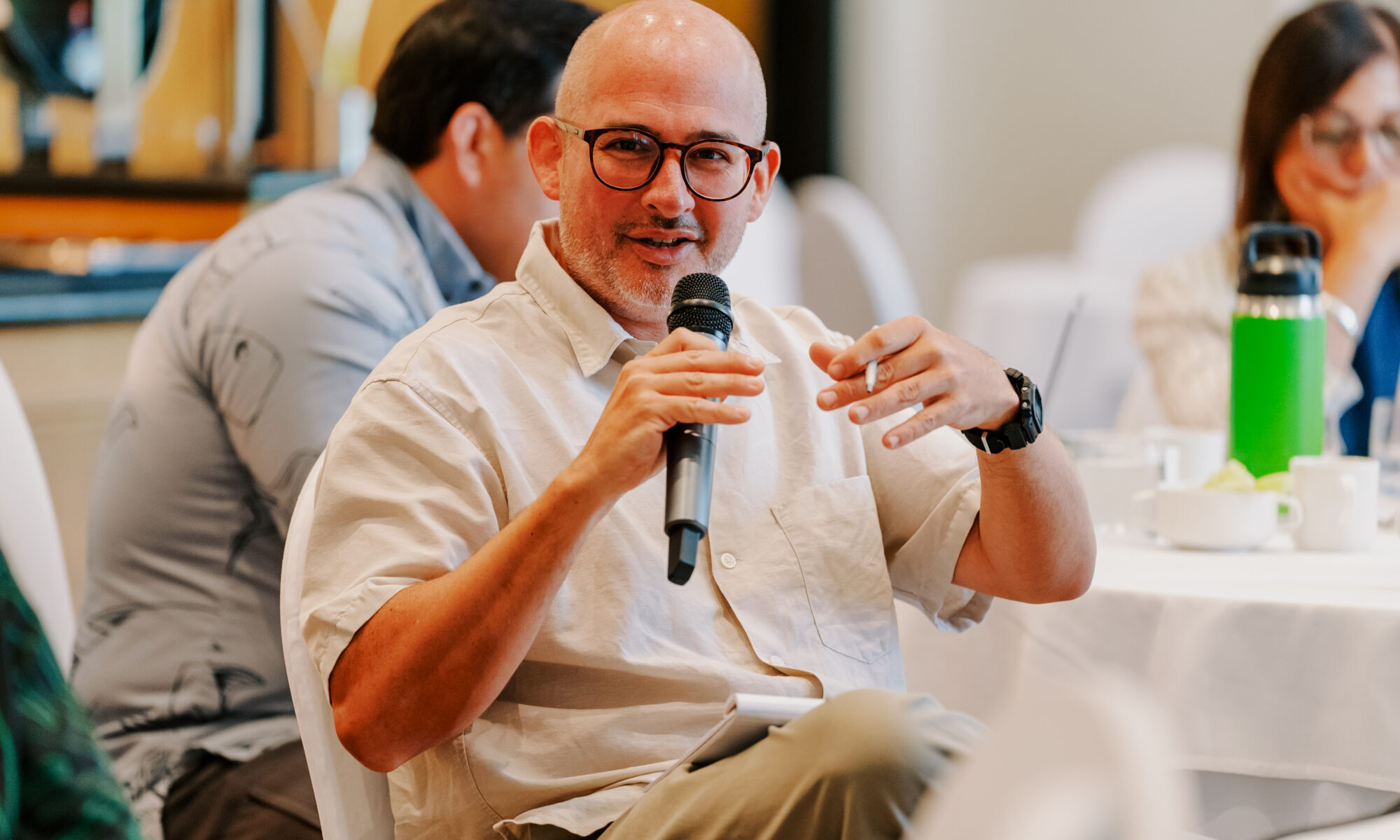
For Bastian Bentlage Ph.D, providing that belief to students is a responsibility.
As a researcher at the University of Guam Marine Laboratory and principal investigator of the Guam NSF EPSCoR E-RISE grant, Bentlage has built a reputation for advancing marine science and biodiversity research.
That is not his only legacy. Another aspect of his performance and personality may have an even greater long-term impact on Guam: investing in young scientists and helping them discover their own potential.
In laboratories, on research vessels, and in the field, across the EPSCoR programs over the years, or through the SEAS Alliance fellowships, Bentlage has made mentorship a central part of his work. His approach reflects a simple but powerful philosophy: scientific discoveries are important, but developing people is what ensures those discoveries continue for generations.
“I mentor because I want to pass on the support and guidance that others have given me over the years, and without them, I wouldn’t be where I’m at today,” said Bentlage.
Building science, scientists and culture
Island communities face some of the world’s most pressing environmental challenges—from coral reef conservation and biodiversity loss to climate resilience and sustainable resource management. Solving these complex issues will require more than today’s experts. It will require tomorrow’s leaders.
That is why mentorship is so essential.
“Bastian is an effective mentor because he recognizes his mentees as people first. He takes the time to build meaningful relationships with his mentees and offers constant support. While Bastian encourages his mentees, he also empowers them to surpass their goals,” said student Anela Duenas, who is also a Bentlage mentee. “Bastian leads by example and often participates in the field alongside his students. His ability to create a safe and open lab space is truly inspiring.”
Rather than simply assigning tasks, Bentlage encourages students to ask difficult questions, think critically, and become independent researchers. Students are treated as collaborators, not just assistants, gaining firsthand experience in designing research, collecting data, presenting findings, and communicating science to diverse audiences. He works to help with experiments, even when they go off course.
“Things went wrong with my experiment but he was able to problem solve and guide me throughout each issue. He is also able to meet people at their level and guide you in the most effective way possible that works best for you. I was able to understand the importance of my project and all the logistics of it easily when he would explain it,” explained Ale’a Duenas, another Bentlage mentee. “He also cared about our input as students and asked us what we thought about our own experiments and what our interests were. He created a lab environment where I felt welcomed and where I wasn’t afraid to ask questions and ask for guidance.”
The result is confidence.
Mentorship is one of the highest-impact investments any scientist can make. A published paper advances knowledge. A well-mentored student advances an entire field. Each student who develops into a scientist has the potential to mentor dozens more throughout their career. That ripple effect extends far beyond a single laboratory, strengthening research institutions, government agencies, nonprofits, classrooms, and communities across Guam and the Pacific. According to Cheryl Sangueza, Ph.D.,co-principal investigator on the SEAS Islands Alliance Guam programs, who has worked with Bentlage on many mentorship programs, that mindset has led to developments with both mentees and fellow mentors with Bentlage. “Bastian efficiently creates a mentoring ecosystem for his mentees, to show that he understands people with different experiences and different levels of experience are just as valuable a mentor as he is,” said Sangueza. “I’ve personally seen the range of high school, undergraduate, grad, post docs and him serving as a blend of mentees and mentors in his lab.” Bentlage’s work demonstrates that the true measure of scientific leadership is not only what is discovered today, but who is prepared to make the discoveries of tomorrow. “Mentoring helps students build the confidence, judgment, and practical understanding they need to navigate their careers. And those are things that are often not really taught in the classroom,” said Bentlage. “This is really where mentoring and the relationship between students or trainees and their mentors, including me, comes in.” Where Bentlage’s career and research may take him next is unknown, but one things is for sure, he will not stop helping to develop students and leaders of tomorrow, wherever that may be.