

(This article is part of a series featuring the inaugural recipients of Guam NSF EPSCoR E-CORE seed funding awards)
Guam’s coastal structures face a harsh reality: salt air and seawater corrode the steel bars inside concrete. Most construction materials, including cement and aggregates, must be shipped in from off-island, and the island continues to grapple with how to dispose of solid waste, including glass bottles.
Ernesto J. Guades, Ph.D., P.E., chair and associate professor of civil engineering at the University of Guam (UOG) School of Engineering, sees these challenges as connected and as an opportunity.
Guades received $49,554 in Guam NSF EPSCoR E-CORE inaugural seed funding for his project, “Hybrid Waste Glass and Recycled Concrete Aggregate with Fiber-reinforced Polymer Composite Bar as Sustainable and Resilient Material: Characterization of Mechanical and Structural Behaviors.“
His research will test whether recycled bottle glass and concrete salvaged from demolished buildings and roads can replace quarried gravel as aggregate. It will also test whether glass fiber-reinforced polymer (FRP) bars, a non-corrosive material, can replace steel reinforcement, particularly in marine environments. The goal is to understand how these materials behave, so the findings can inform design guidelines for practicing engineers on Guam and other locations.
The approach is rooted in circular economy practice. Rather than treating glass bottles and debris as waste to be discarded, the project looks at how these materials can be kept in use as valuable construction materials. Doing so could reduce the island’s reliance on quarried aggregate and imported materials while keeping resources circulating on Guam.
“I think we have lots of glass (waste) here and so we would like to capitalize on them,” Guades said. He added that the problem with recycled concrete is “how we can convert them into an equivalent material,” because quarrying aggregate “is not sustainable.”
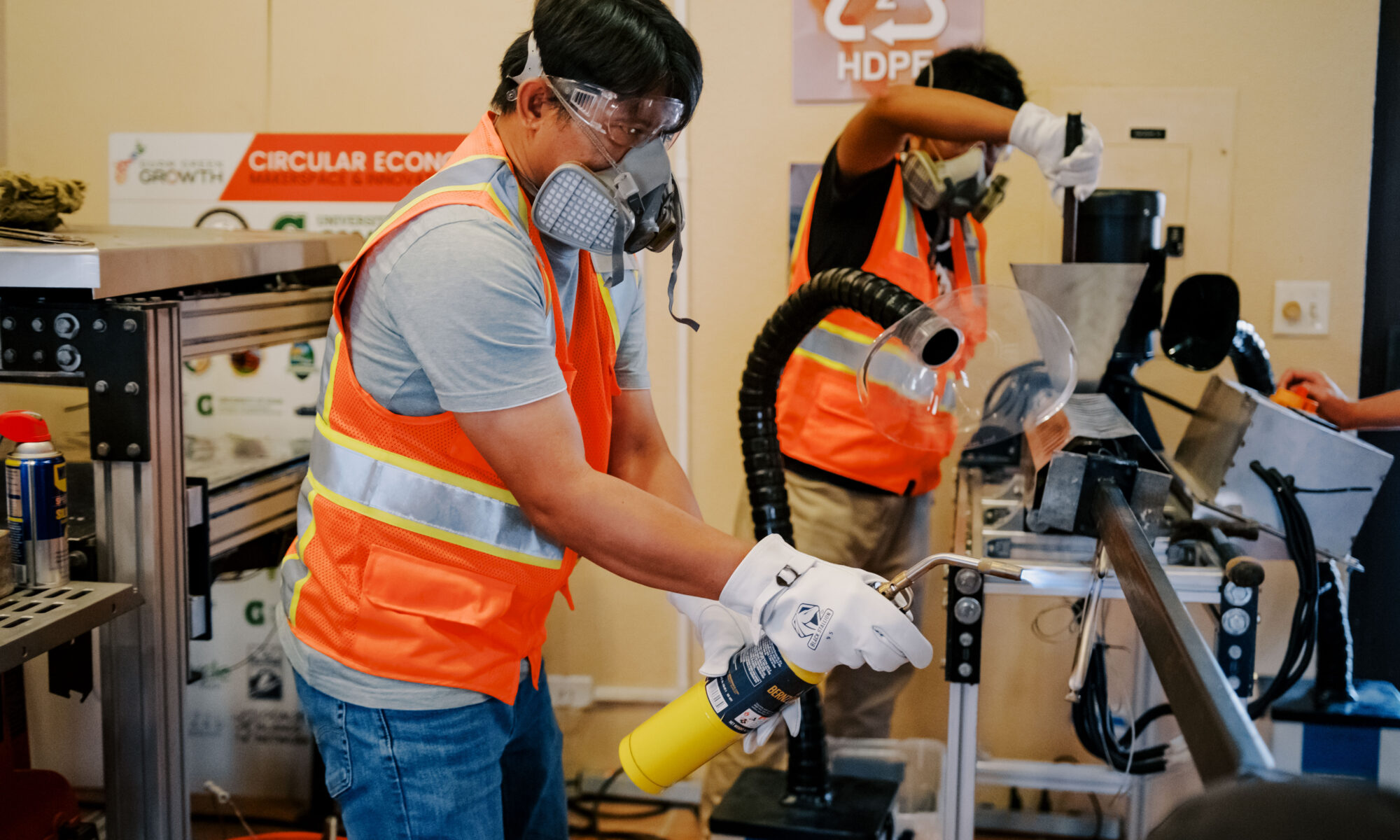
The work will take place at the UOG School of Engineering, using a new NSF-funded universal testing machine along with existing lab equipment. Two student research assistants will join the project. “This is capacity building for our students,” Guades said. Hopefully, he said, once the students are involved with the project, this will build a sense of responsibility for helping Guam.
The potential benefits of tapping into these materials reach beyond the lab, according to Guades. “Because they are durable, that means that we will be reducing… the cost of repair, the cost of maintenance of the facilities and also structures in Guam,” Guades said. Once material properties are established, the research could also open the door to small businesses that turn local waste into construction products, creating jobs and serving as a model for others.
Guades has spent about a decade studying FRP composites. “When I arrived in Guam, I found out that there are still classical issues on Guam that we need to solve,” he said, pointing to waste disposal, material sustainability, typhoon resilience, and durability in a corrosive environment. “It’s not new, but we need to solve them because those are required for now.”
The seed award is designed to generate preliminary results that can support larger proposals to NSF or other funding agencies. “I’m really excited because of that; I will be getting additional input from stakeholders, from the community, that might also improve the project as well,” Guades said.
Guam NSF EPSCoR heads several projects and programs, including capacity building, circular economy, and coral research projects aimed at making a difference on Guam and throughout the region. It is also the catalyst for Guam Green Growth, the largest public/private partnership in the island’s history working toward a sustainable future.
Key Takeaways
- Award: $49,554 in Guam NSF EPSCoR E-CORE seed funding, running June 1, 2026, through May 31, 2027.
- Focus: Using recycled bottle glass and recycled concrete as aggregate, paired with corrosion-resistant glass fiber-reinforced polymer bars in place of steel.
- Local challenges addressed: Corrosion in marine environments, reliance on off-island materials, aggregate quarrying, and solid waste disposal.
- Outcome: Data on material behavior to guide design guidelines for engineers on Guam and possibly other locations.
- Community impact: Lower maintenance and repair costs, reduced waste, student training, and potential small businesses and job opportunities.
- Possible next step: Results will support a larger proposal to NSF or other funding agencies.