SMRE final presentations: Students combine mathematics and marine science to study coral microbiomes

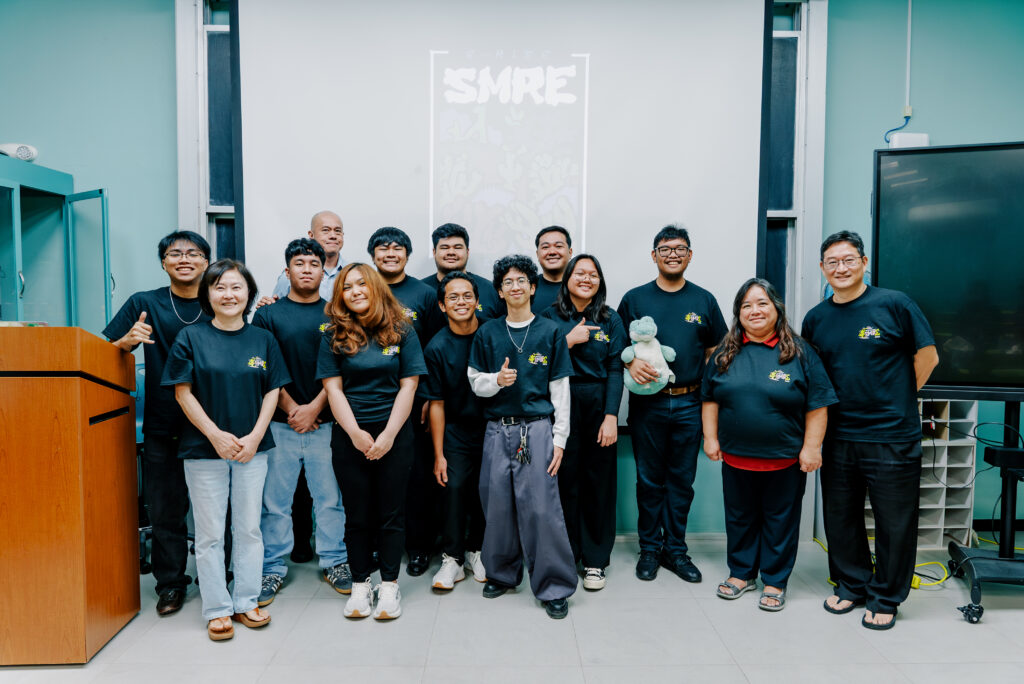
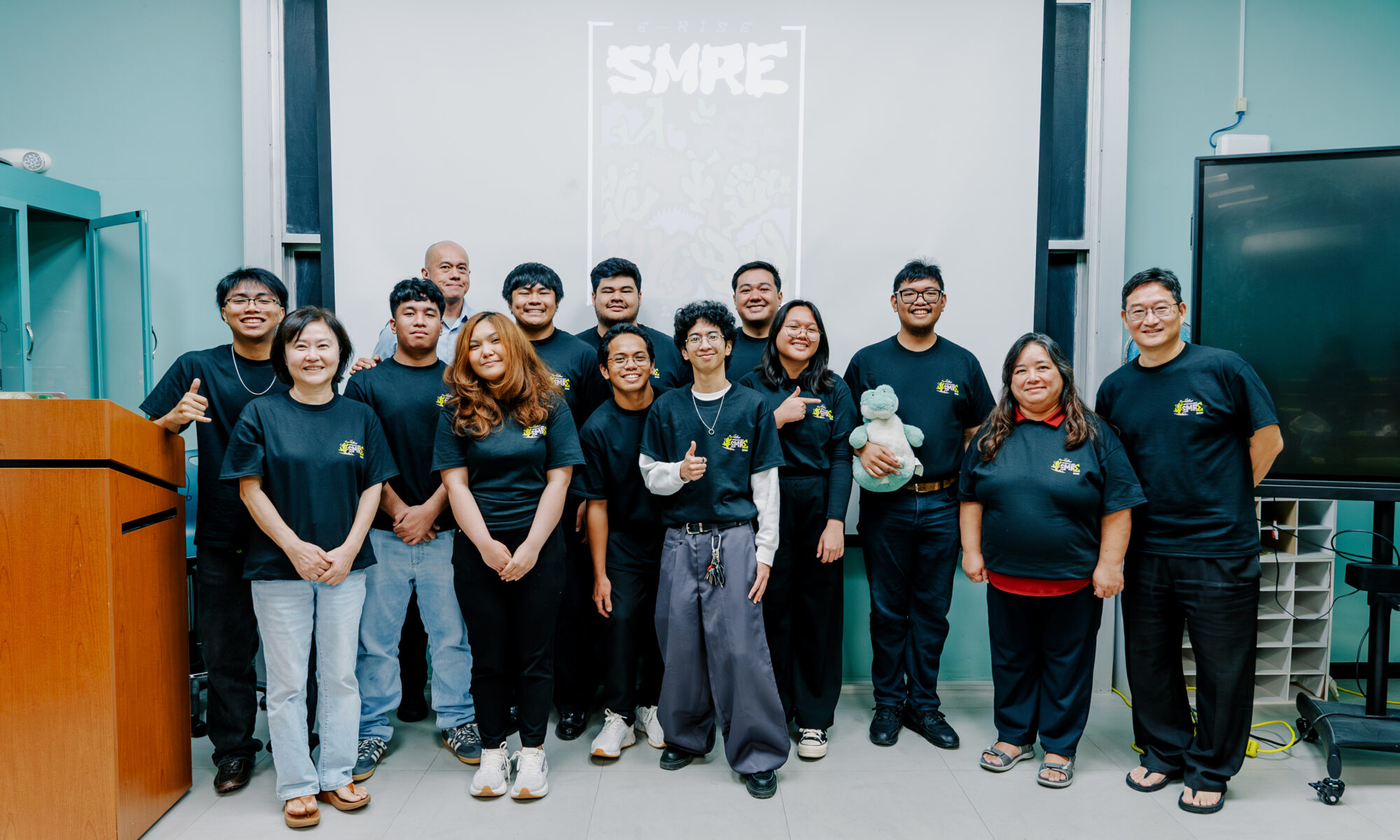
The 2026 Summer Math Research Experience (SMRE) cohort and mentors gather following the program's final presentations at the University of Guam.
The 2026 Summer Math Research Experience (SMRE) cohort and mentors gather following the program's final presentations at the University of Guam. Supported by UOG's NSF EPSCoR E-RISE, the undergraduate students spent the summer applying mathematics and data analysis to marine science research, exploring how coral microbiomes respond to transplantation and contribute to reef restoration efforts.

The 2026 cohort of the Summer Math Research Experience (SMRE), supported by the University of Guam’s (UOG) NSF EPSCoR E-RISE, completed the program by presenting findings that apply mathematics and data analysis to a select research study focused on corals. 

The SMRE program offers undergraduates advanced math research experience under UOG faculty mentorship. Students enhance problem-solving and analytical skills while working on projects with real-world applications.

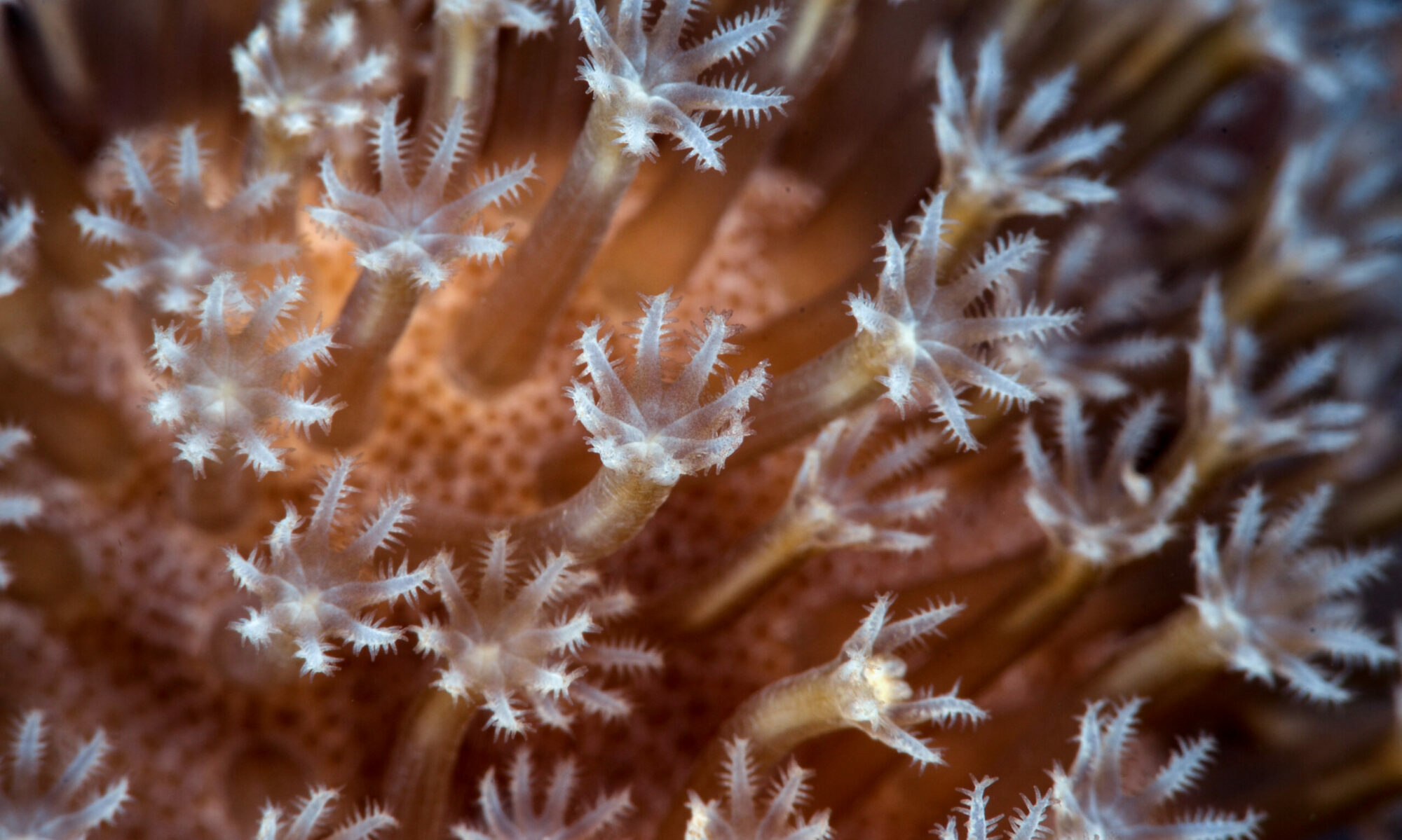
The 2026 SMRE cohort expanded on a 2025 study led by Colin Lock, with co-authors CJ Anthony and E-RISE principal investigator and SMRE mentor Bastian Bentlage, Ph.D., which examined how microscopic algae (Symbiodiniaceae) and bacterial dynamics influence the transplantation survival of key reef corals (Porites lobata and Porites cylindrica) in Guam. The study found that algal and bacterial communities vary by coral species, individual colonies, and planting sites. 

Both teams emphasized the importance of the conservation of reef corals, noting decreases in coral coverage and biodiversity over the years. 

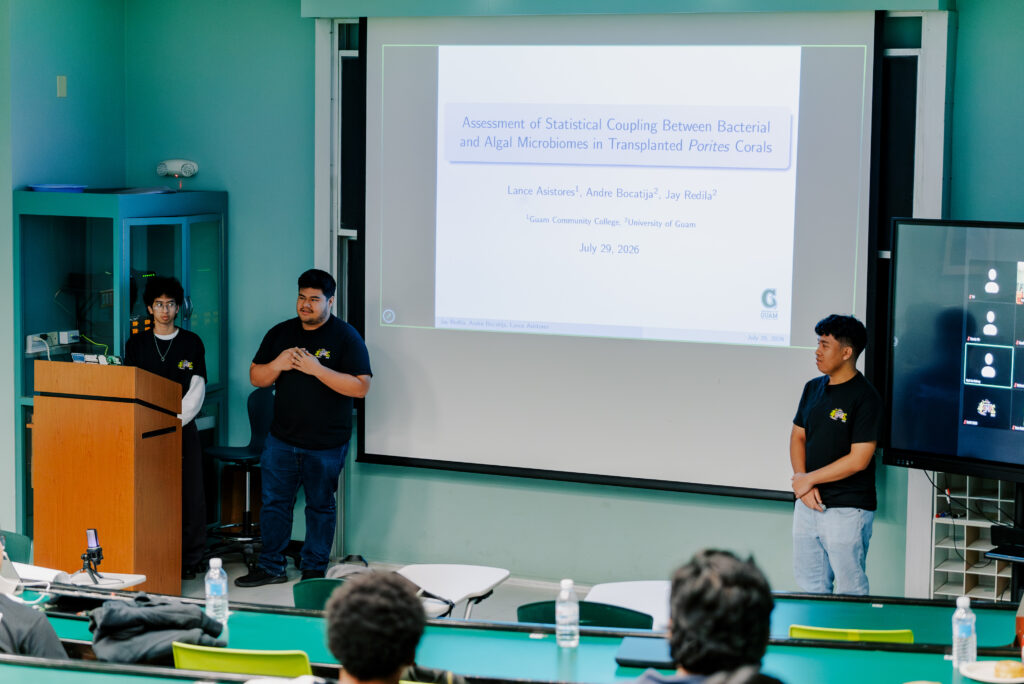
The first SMRE student team, consisting of Lance Asistores (GCC, Nursing), Andre Bocatija (UOG, Computer Science & Math), and Jay Redila (UOG, Civil Engineering), used mathematical models to assess the bacterial and algal communities in the corals.

The team investigated whether coral algal and bacterial connections represent real biological relationships or statistical noise to help guide future reef restoration. They concluded that while strong algal-bacterial links show promise, careful statistical testing is required before drawing firm conclusions.

Lance Asistores, Andre Bocatija, and Jay Redila present their SMRE research
Lance Asistores, Andre Bocatija, and Jay Redila present their SMRE research examining mathematical models of bacterial and algal communities associated with Guam's reef corals.

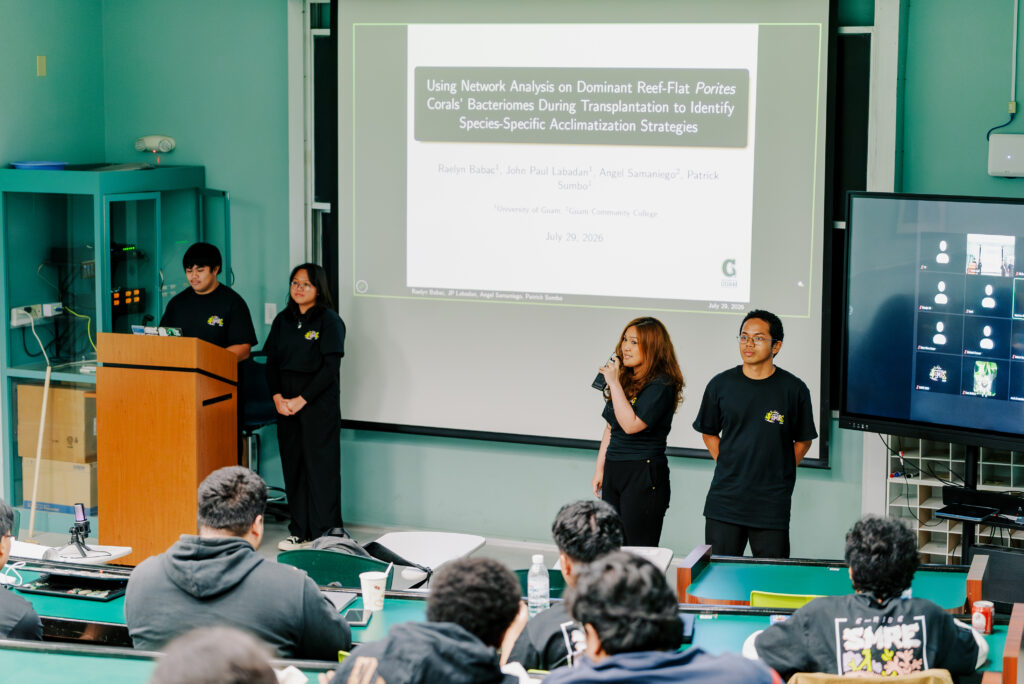
The second SMRE team, including Raelyn Babac (UOG, Secondary Education with emphasis in Mathematics), Angel Samaniego (GCC, Liberal Studies and Human Services), John Paul Labadan (UOG, Civil Engineering), and Patrick Sumbo (UOG, Civil Engineering), looked at datasets from the coral transplantation study.

Using graph theory, the team measured key metrics to track how bacterial families interact, connect, and serve as “keystone” drivers within the community. They visualized these metrics with graphs to map changes in microbial relationships as corals adapted during transplantation.

Mentor Hyunju Oh, Ph.D., professor of mathematics at the College of Natural & Applied Sciences (CNAS), observed that through collaboration with peers, mentors, and research assistants, the students gradually build confidence and developed research skills.

Oh noted significant improvement in the SMRE students’ communication skills throughout the program. Weekly presentations helped students share ideas, overcome challenges, and gain confidence in presenting their research. “I saw that they improve every week. So presentation skills are better, better.”

Raelyn Babac, Angel Samaniego, John Paul Labadan, and Patrick Sumbo present their SMRE research
Raelyn Babac, Angel Samaniego, John Paul Labadan, and Patrick Sumbo present their SMRE research using graph theory to analyze bacterial interactions within transplanted corals. 

First time mentor Joo-Chul (J.C.) Yoon, Ph.D., assistant professor of physics, guided students in exploring how mathematical modeling and analysis support scientific research. 

Yoon noted that, despite the challenges of research, SMRE enables students to explore new fields, develop skills, and gain insight into the work of researchers. “This is a good opportunity to see what researchers in the research field could do if they get involved in research. So this is actually a good opportunity for the students.”

Through his team’s mathematical assessment of biological data, Redila learned that research is not always about finding a single answer, but about carefully evaluating results and understanding the underlying process. 

He said,“Coming into this, I thought I would have a bigger answer by the end of it, but it taught me the importance of just assessing your answer to see if it’s even correct and how important those steps are, even if it doesn’t give a big answer.”

Meanwhile, Babac saw her team’s project develop from an initial idea into a completed presentation. “I think it was really challenging, but in the end, it was really worth it to see our research come together.”

Sumbo recognized that research involves uncertainty, problem-solving, and discovery. “I think my number one takeaway from this research was the fact that we actually didn’t even know anything…But towards the end, it felt like it kind of all came together.”

For Bocatija, SMRE offered firsthand experience with the research process, which encouraged him to explore further. “I think, it’s just about getting out of your comfort zone and trying to experience new things.”