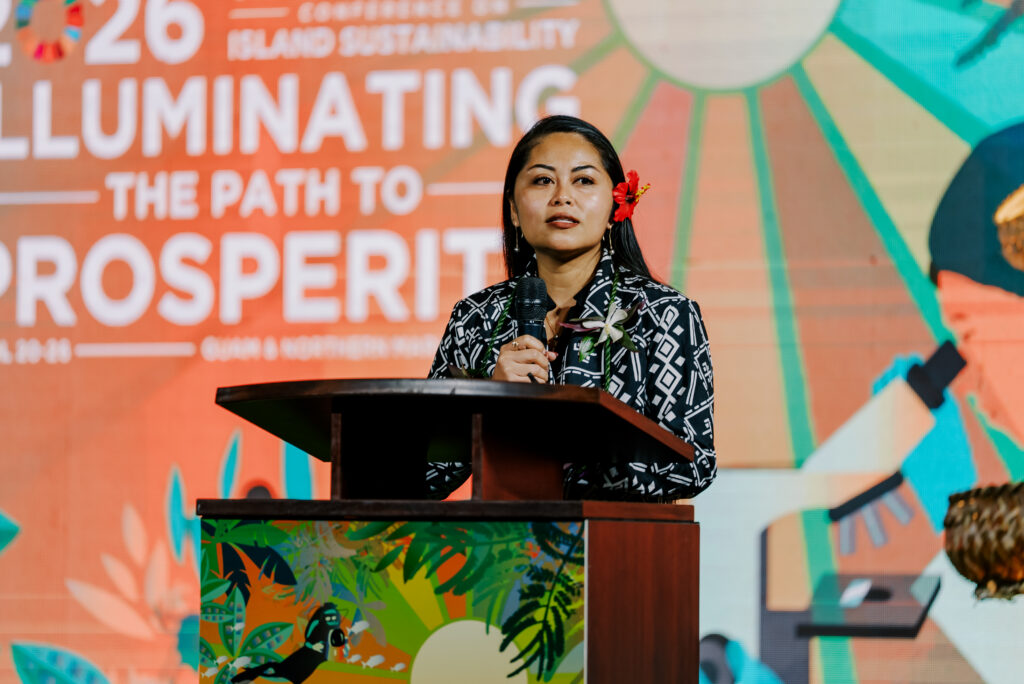
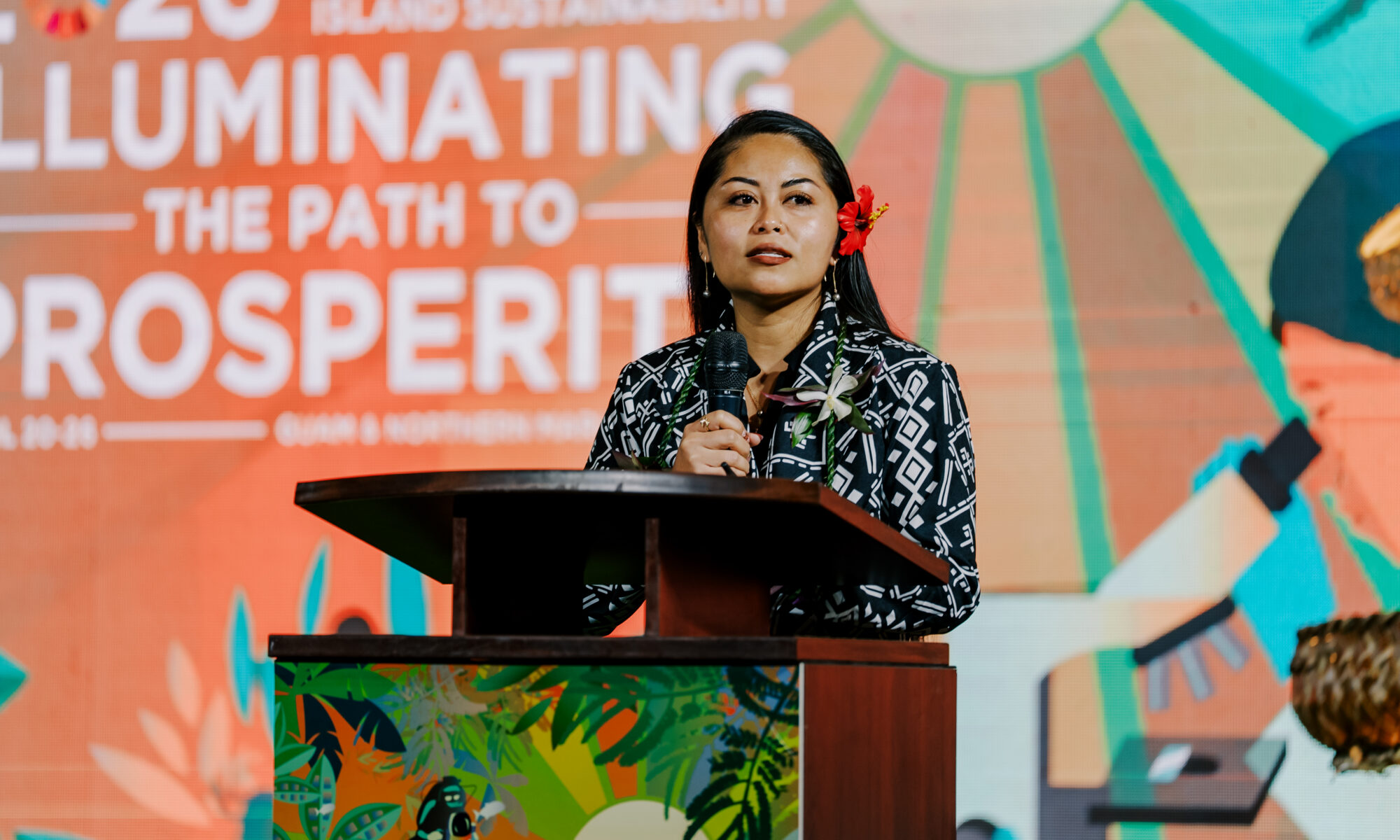
“Because for us in the Pacific, resilience is not a trend,” said Sabrina Suluai-Mahuka, Ph.D., founder and executive director of Finafinau, one of two educators at the forefront of Pacific scholarship and advocacy who served as featured speakers, framing the emotional and political weight of island resilience in the face of ongoing environmental and social challenges.
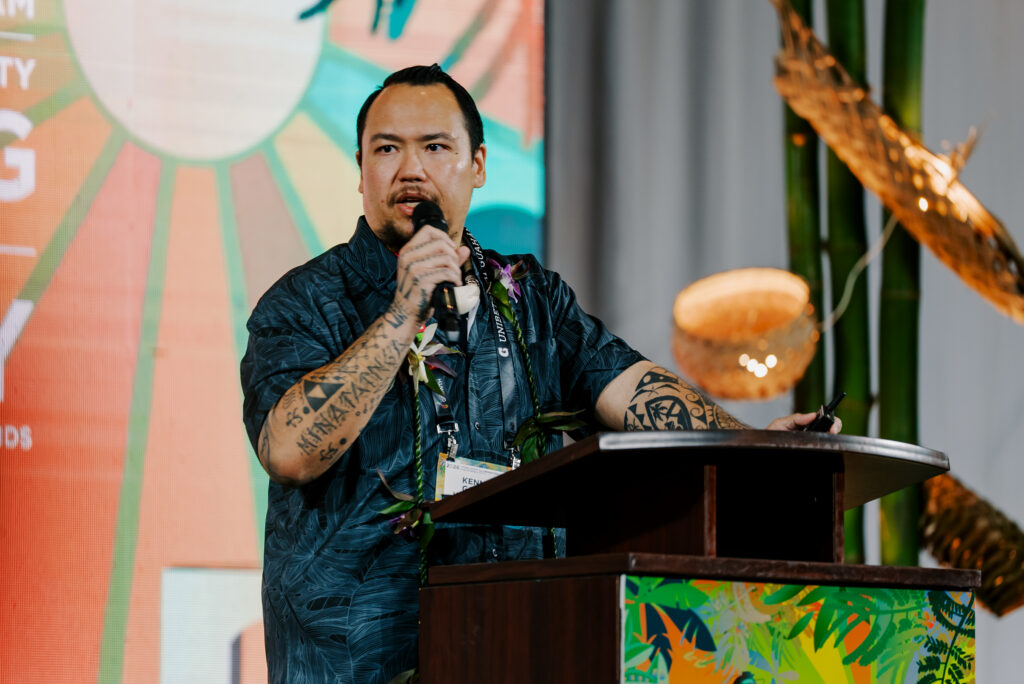
Suluai-Mahuka, a 2021 Teacher of the Year awardee for American Samoa and Kenneth Gofigan Kuper, Ph.D., associate professor of Political Science, CHamoru Studies, and Micronesian Studies at the UOG, served as featured speakers on Thursday at the 17th University of Guam Conference on Island Sustainability
Drawing from her experiences as an educator, mother, and advocate, she emphasized how deeply personal her connection to sustainability work has become. Reflecting on her daughter’s relationship with environmental storytelling and the ocean, she shared, “But somehow, the ocean became her safe space.” Her remarks culminated in a powerful reframing of development discourse, declaring, “Prosperity is not extraction.”
Suluai-Mahuka used her platform to challenge conventional definitions of progress, warning against systems that prioritize economic growth at the expense of culture, consent, and ecological integrity. Her message stressed that sustainability must be rooted in protection, care, and intergenerational responsibility.
Kuper’s presentation complemented these themes through a futures-focused lens, examining uncertainty, governance, and the moral responsibilities tied to decision-making in the present. He began with a stark reflection on global anxieties, stating, “Most of the time the future scares me. Sometimes the future distracts me far too much from the present.”