
Five students accepted to STEM summer research program

Bridge Program Photo 4

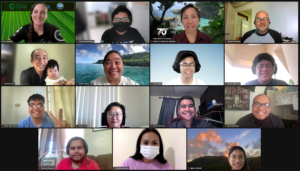
Five undergraduate students will gain valuable research experience this summer through the NSF INCLUDES: SEAS Bridge to Ph.D. Program, an eight-week research program held at Pennsylvania State University.  

From June to August 2022, the students will be trained for a future as a Ph.D. student, learn about coral physiology, and gain hands-on experience in biological techniques such as DNA and RNA analysis.  

For these students, it will be their first time participating in an off-island research program.  

“I am looking forward to learning more about myself. This is roughly a two-month program that is planned to be in person, so this will be the longest time I will be away from home without my mom,” said Louise Pascua, a biology major and a 2022 Guam NSF EPSCoR student researcher. “It will be a very fun and interesting journey not just scientifically, but also personally.” 

While at PSU, the students will practice basic oceanographic techniques aboard the UMCES flagship research vessel Rachel Carson and strengthen their science communication skills by participating in outreach activities. 

Over the course of the program, the students will be placed in a Penn State research laboratory to do independent research and be mentored by the laboratory principal investigator, their students, and staff.  

Hands-on experience  

Pascua will focus on mosquito virus interactions and arthropod genetic manipulation under Jason Rasgon, an entomology professor at PSU. 

Gabriella Prelosky, a biology student and a 2021 NSF SEAS research fellow, will study the foraging habits of honeybees and alfalfa leafcutter bees under the mentorship of Natalie Boyle, an assistant research professor at PSU.  

“I genuinely look forward to working with a topic outside of my comfort zone,” said Prelosky. “I’ve been looking at different topics that don’t focus on marine biology, and I’ve been increasingly more interested in topics of ecology and now entomology, and I look forward to exploring this discipline.” 

Anna Aguirre, a biology student and a 2021 NSF SEAS research fellow, will study plant pathology and environmental microbiology under Sharifa Crandall, an assistant professor at PSU.  

“I’m very excited about the research I will do because the topic is one of my great interests. I think this experience will also be unlike any other because I’m attending it off-island with my friends for a whole two months,” said Aguirre.  

Merry Remetira, a civil engineering student and a 2021 NSF SEAS research fellow, will study lab analyses of biomechanics of swimming jellyfish with Margaret Byron, an assistant professor of mechanical engineering at PSU. 

“I feel very grateful to my mentors and peers from the EPSCoR program and my high school marine biology teacher who have made it possible to make me apply and for broadening my experiences,” said Remetira.  

While at PSU, the students will have the opportunity to interact with students from other NSF SEAS jurisdictions.  

“I am so honored and excited about being accepting into this great program,” said Anela Duenas, a biology major and 2021 NSF SEAS research fellow. “I am most excited to meet my peers from other SEAS hubs such as the US Virgin Islands and Puerto Rico!”  

During the program, Duenas will study vegetable crop science under the mentorship of Francesco Di Gioia, an assistant professor at PSU.  

About NSF INCLUDES 
The NSF INCLUDES: SEAS Islands Alliance is administered by the UOG Center for Island Sustainability and Sea Grant programs in partnership with the School of Education at the University of Guam. UOG faculty members Austin Shelton, Cheryl Sangueza, and Else Demeulenaere serve as investigators of the grant award. NSF INCLUDES collaborates closely with the Guam NSF EPSCoR program, also funded by the National Science Foundation. 

Search for Guam’s next conservation force underway 

DSC04913 2
DSC04913 2
Guam Green Growth (G3) Conservation Corps members examine honeybee hives at a ranch on Aug. 10, 2021 in Malesso’, Guam. Christopher Rosario, a local apiarist and president of the Guam Beekeepers Association, shared his knowledge of bees and their role in island sustainability during the five-month period of the G3 Conservation Corps program.

Guam NSF EPSCoR is a catalyst for Guam Green Growth (G3). 

The call has sounded for a second crew of conservation stewards eager to further Guam’s progress in island sustainability and the emerging green economy. 

The recruitment period for the second cohort of the Guam Green Growth (G3) Conservation Corps officially began on Jan. 10, 2022. 

The G3 Conservation Corps is a five-month workforce development program that aims to advance and apply 12 corps members’ skills in the focus areas of agriculture and aquaculture, circular economy and zero waste, ocean conservation, invasive species management, reforestation and watershed restoration, energy conservation and renewable energy, and island beautification from March to August this year.  

Corps members will have the opportunity to collaborate and learn alongside teams from partnering government agencies and private organizations in support of various conservation initiatives throughout the island, while equipping themselves for a brighter future.  

“The green economy is growing on Guam, and we want to help our community prepare for the emerging workforce through this program,” said Phillip Cruz, G3 Conservation Corps coordinator. 

The first G3 Conservation Corps cohort made significant strides toward our sustainable future. They recycled over 70,000 aluminum cans, planted 2,000 food crops, collected hundreds of bags of illegally dumped waste from streets and jungles, planted 2,890 trees, installed 640 solar rooftop panels, and more. 

“The inaugural G3 Conservation Corps cohort made incredible contributions to our island’s sustainability in 2021,” said Austin Shelton, director of the University of Guam Center for Island Sustainability and Sea Grant. “We are proud of what they contributed during the program and the sustainable actions they continue to make as trained citizens. This year, we look forward to a new group of conservationists who will serve our island and inspire our community.”  

“We’re looking for individuals who are respectful, reliable, and aren’t afraid of hard work. If you would benefit from this workforce development program, please apply today. Share widely with your friends and family, who may also benefit from this program,” added Cruz. 

How to Apply 
Those interested in applying can submit their application through the G3 website at guamgreengrowth.org by Feb. 6, 2022.   

Applicants must be at least 18 years old, have reliable transportation, and be U.S. citizens, nationals, or legal residents. 

Selected applicants will be required to submit police and court clearances, purified protein derivative (PPD) skin test results, proof of full COVID-19 vaccination, submit to a drug test, and undergo a physical examination.  

G3 Conservation Corps members will receive a biweekly stipend of $1,300. Members will earn up to 80 continuing education units from the university upon successful completion of the program.  

The G3 Conservation Corps program is made possible through FY22 Guam Green Growth appropriation to the University of Guam. 

About G3 
Aligned with the 17 U.N. Sustainable Development Goals, the Guam Green Growth Initiative, or G3, cultivates an ecosystem for transformative action to achieve a sustainable, prosperous, and equitable future for Guam. The University of Guam facilitates the island-wide initiative in cooperation with the Office of the Governor of Guam and over 100 members of the G3 Working Group, representing all sectors of society.  Guam Green Growth in funded in part by NSF Guam EPSCoR.

Come spark new industries in new Guam Green Growth Makerspace

DSC03506

Entrepreneurs and creators throughout the island can put their innovative abilities to work and transform waste into marketable products at one convenient location in the coming weeks.  

The Guam Green Growth (G3) Circular Economy Makerspace and Innovation Hub will celebrate its grand opening to the public at 3:30 p.m. January 13, 2022, out of three houses at the CHamoru Village in Hagåtña.  

The spaces will provide creators resources to upcycle items and materials in contribution to Guam’s emerging green economy. Moreover, the effort will help address the overreliance on imported products and increased amount of waste generated locally.  

Alongside a green store and innovation hub offering local merchandise for the environmentally conscious and guidance for those seeking business advisement, the maker space house features an abundance of tools capable of processing wood, metal, various other materials, and plastic in a third house devoted to world-renowned Precious Plastic machines. 

For a fee, creators can access a laser cutter, computer numerical control router, 3D printer, vinyl cutter, and apparatuses to shred, extrude, inject, press, and melt plastic, among other convenient equipment. Patrons can avail of the services for $50 per month or $500 per year with a 20% discount applicable to yearly memberships.  

The G3 Circular Economy Makerspace and Innovation Hub also supports G3’s mission toward establishing sustainable and profitable cottage industries, improving the performance of enterprise facilitation and development programs, and supporting regional economic development.  

The center’s managing and support staff are seasoned in business and product development and are willing to share their skills and knowledge with those utilizing the spaces. Those eager to learn can attend creative workshops and hear from members of the University of Guam (UOG) School of Business and Public Administration, Guam Unique Merchandise and Arts, the Small Business Development Center, and the Guam Economic Development Authority. Additionally, products created can be sold in the green store on consignment.  

Myracle Mugol, G3 circular economy coordinator, sees the operation as a place to grow with like-minded people and convenient resources, what she says can be missing factors for ideas to come to fruition.  

 “When people ask me about the space and all the things that come with it, I tell them it’s my three Cs of G3: curation of equipment, tools, and workshops to make our ideas happen; collaboration with development and resource partners, who assist with the innovation and expansion into business and cooperatives; and community – the people surrounding these spaces, who allow for ideas to grow, develop, and move,” said Mugol. 

“The community is the support and backbone for sustainability; the very change-makers who push the culture needed for the initiatives to move forward,” she continued.  

“Our team looks forward to the opening of the G3 Circular Economy Makerspace and Innovation Hub and all the creative products that will be developed by our talented community,” stated Dr. Austin Shelton, director of the UOG Center for Island Sustainability and Sea Grant. “The hub will reduce our island’s waste and diversify our economy through the stimulation of new green industries.”  

The G3 Circular Economy Makerspace and Innovation Hub is funded by the National Science Foundation’s Established Program to Stimulate Competitive Research Guam Ecosystems Collaboratorium for Corals and Oceans, better known as EPSCoR GECCO, GEDA, and the Office of the Governor.  

Ahead of the January 13 grand opening, the Guam Green Growth Circular Economy Makerspace and Innovation Hub is currently open for small tours which can be arranged via email to mugolm@triton.uog.edu. 

About G3 
Aligned with the 17 U.N. Sustainable Development Goals, the Guam Green Growth Initiative, or G3, cultivates an ecosystem for transformative action to achieve a sustainable, prosperous, and equitable future for Guam. The University of Guam facilitates the island-wide initiative in cooperation with the Office of the Governor of Guam and the 99 members of the G3 Working Groups, representing all sectors of society.   

UOG students present and network at STEM diversity conference

Louise SACNAS

Four members of the Guam NSF EPSCoR undergraduate Student Research Experience and five research fellows from the NSF INCLUDES: SEAS Islands Alliance program presented their research at the 2021 SACNAS National Diversity in STEM Digital Conference from Oct. 25 to Oct. 29, 2021.  

SACNAS, the Society for Advancement of Chicanos/Hispanics and Native Americans in Science, is the largest multicultural STEM diversity program in the US.  

During the conference, the students were able to attend workshops, research presentations, and connect with officials from schools nationwide for research experience opportunities.  

“I feel great that I got to present at SACNAS,” said Louise Pascua, a UOG undergraduate biology student. “I wasn’t sure if we were going to finish in time for the conference because we had a lot of difficulties, but everything worked out in the end. I’m glad I got to show everyone all the work I’ve been doing this past year.”  

Through the Guam NSF EPSCoR undergraduate Student Research Experience, Pascua was mentored by UOG Professor of Biology Daniel Lindstrom. Pascua’s presentation entitled, “Genetic Barcoding of all Amphidromous Nerite and Thiarid Snails Native to Guam,” focused on determining whether or not certain species of snails were native to Guam.  

“I feel very thankful and appreciative that a student with my background was able to present at this conference,” said Merry Remetira, a UOG undergraduate civil engineering student. “Everyone has been very kind.”  

UOG Assistant Professor of Oceanography Atsushi Fujimura mentored Remetira for her Student Research Experience. Remetira’s project, “The Relationship between Seagrass Cover and Water Physicochemical Parameters in Achang Bay, Guam” focused on determining water quality and environmental factors that affected the growth of seagrass on Guam. According to the study, seagrass meadows are beneficial ecosystems that provide habitats and food sources for many marine species.  

During the conference, the students were able to connect with organizations and colleges for research opportunities. 

Representatives from Texas A&M University and Iowa State University reached out to Pascua and Remetira about their work. 

Boston University, Rutgers University, and the Scripps Institution of Oceanography were among several institutions that contacted Gabriella Prelosky, a UOG undergraduate biology student, about research experience opportunities.  

As an NSF INCLUDES: SEAS Islands Alliance research fellow, Prelosky was mentored by Christopher Lobban, a UOG Professor Emeritus of Biology. Her project, “Biodiversity of mangrove diatom communities in three Western Pacific islands” focused on documenting the most frequently occurring diatom species in Guam, Palau, and Yap. Through her project, 13 new species of diatoms were recognized. Earlier this year, Prelosky discovered two potentially new diatom species from Yap.  

“A lot of people reached out to me to check out their programs and even my dream school messaged me! It was a lot of fun and it’s an opportunity that not a lot of people get to experience,” said Prelosky. “I feel really lucky.” 

The NSF INCLUDES: SEAS Islands Alliance is administered by the UOG Center for Island Sustainability and Sea Grant programs in partnership with the School of Education at the University of Guam. Austin Shelton, Cheryl Sangueza, and Else Demeulenaere serve as investigators of the grant award. NSF INCLUDES collaborates closely with the Guam NSF EPSCoR program, also funded by the National Science Foundation. 

Merry R SACNAS
“I feel very thankful and appreciative that a student with my background was able to present at this conference,” said Merry Remetira, a UOG undergraduate civil engineering student.

Students present and win at STEM conference

New Diatoms Photo 1 3

Five undergraduate NSF INCLUDES: SEAS Islands Alliance research fellows from the University of Guam joined over 1,300 scientists and researchers from all over the world at the Coastal and Estuarine Research Federation (CERF) 2021 Conference which was held virtually from Nov. 1 – 4 and 8 – 11, 2021.  

This year’s conference theme was “CERF at 50: Celebrating Our Past, Charting Our Future.”   

During the conference, students had the opportunity to interact with peers, network with mentors, and attend workshops and panel discussions.   

Among the delegation, UOG students Gabriella Prelosky, Britney Sison, Anela Duenas, Daniel Mabagos, and Anna Aguirre presented student posters of their research projects.  

Prelosky and Sison won the only two “CERF 2021 Best Undergraduate Poster Awards” for their research projects which concerned the documentation of different diatom species in the Marianas.  

Both Prelosky and Sison were mentored by Christopher Lobban, a UOG professor emeritus of biology.   

“Receiving an award for my work is amazing! There was a lot of effort done through both me and Dr. Lobban and it really paid off,” said Prelosky. “Knowing UOG took the only two “Best Undergraduate Posters” is amazing.” 

Sison said that her experience being mentored by Lobban has made her a better scientist and is thankful for receiving the award.  

“I feel happy and extremely grateful to my mentor, Dr. Lobban, Gabby, and everyone from the NSF INCLUDES: SEAS Islands Alliance Program,” said Sison.  

The NSF INCLUDES: SEAS Islands Alliance is administered by the UOG Center for Island Sustainability and Sea Grant programs in partnership with the School of Education at the University of Guam. Austin Shelton, Cheryl Sangueza, and Else Demeulenaere serve as investigators of the grant award. NSF INCLUDES collaborates closely with the Guam NSF EPSCoR program, also funded by the National Science Foundation.  


NSF Guam EPSCoR launches new monthly podcast

Graphic that says "Tasi Talks Podcast"

NSF Guam EPSCOR is happy to announce the launch of a new monthly podcast series, “Tåsi Talks.”  

The podcast will feature updates and interviews with the Guam EPSCoR Team and is available now on Spotify and Anchor with new distribution channels to be announced in the future. 

In the first episode, we dive in with Dr. Bastian Bentlage who tells us about his most recent published paper and the great news it could be for coral reef preservation.

We are also joined by Dr. Cheryl Sangueza who brings EPSCoR students Louise Pascua and Ariana Orallo along to discuss their monumental outing at this year’s Society for Advancement of Chicanos/Hispanics and Native Americans in Science (SACNAS) conference! 

Listen and subscribe for new episodes!

Guam Green Growth recognizes first cohort of Conservation Corps graduates

CorpsGrad
CorpsGrad

An innovative program designed to establish the foundation for workforce development in an emerging green economy achieved a milestone this month by holding its first graduation.  

The University of Guam’s Guam Green Growth Initiative recognized its first batch of conservation corps graduates on Friday, Nov. 19, at the Ricardo J. Bordallo Governor’s Complex (Adelup) in Hagåtña. 

The following Conservation Corps members graduated from the program: Nikomang Bradley, Joseph Certeza, Alana Chargualaf, Abby Crain, EnyDennis Dali, Claudia Rosalia Guerrero, Jacqueline Jones, Drake Kemp, Lusech Ngirakesau, Daniel Stone, Kaya Taitano, and Kevin Wong.  

G3 launched the conservation corps program in partnership with UOG Center for Island Sustainability, NSF Guam EPSCoR and UOG Global Learning and Engagement in June. For the past five months, the 12 members trained full time on various sustainability topics, such as agriculture and aquaculture, island beautification, invasive species removal, reforestation, circular economy and recycling, to renewable energy. 

“Through the G3 Conservation Corps program, the 12 corps member are now trained in these focus areas, and these can be applied in agencies, organizations, and businesses to help transition our island into a green economy,” UOG President Thomas Krise said on the conservation corps’ contribution to G3’s overarching goal. 

Krise said the members will receive continuing education units for completing the workforce development program. “This is supported by our partnership with the Global Learning Education and the Center for Island Sustainability. This is such a great way to combine education with all your other successes,” Krise said, addressing the members of the conservation corps.  

At the graduation, Austin Shelton, UOG Center for Island Sustainability and Sea Grant director, highlighted the contributions of the first batch of Conservation Corps members. “When Guam Green Growth started, I shared that sustainability is about human society, the natural environment, and the economy. And you [graduates] have been an important part of getting ready to prepare our community and our workforce for the emerging green economy.”  

From Jun. 23 to Nov. 9, 2021, the conservation corps accomplished the following: 

  • Engaged community participants and leveraged 4,149 volunteer hours  
  • Picked up 578 extra-large bags of trash, removed 211 white goods and bulky waste; 
  • Collected and recycled 70,516 aluminum cans; 
  • Installed 641solar panels and changed 693 fluorescent bulbs to LED; 
  • Prepped 10 acres of land for reforestation projects; 
  • Planted 2,890 trees and 2,024 food crops; 
  • Built 690 ft. of erosion control devices; 
  • Completed 9 painting projects (murals, bus stops, safety barricades, etc.); 
  • Conducted 6 beach and 19 roadside cleanups, and; 
  • Removed 400 feet of chain of love and 212 invasive bamboo stalks. 

At the ceremony, Lt. Governor Joshua Tenorio commended the conservation corps graduates, “I am really happy and grateful for this great partnership with the University of Guam Center for Island Sustainability and really how all of you are pioneers in this movement to transform the island. In many ways and across many disciplines, the public sector, private sector and civil society.” 

Guam EPSCoR is a catalyst for Guam Green Growth and the Conservation Corps.

WHAT IS G3? 

Guam Green Growth or G3 is the island’s most comprehensive public-private partnership created to achieve a sustainable future. Aligned with the 17 UN Sustainable Development Goals, G3 cultivates an ecosystem for transformative action to achieve our island’s sustainable, prosperous, and equitable future. UOG facilitates the island-wide initiative in cooperation with the Office of the Governor of Guam and the 99 members of the G3 Working Group representing all sectors of our society.    

EPSCoR researcher participates in a collaborative paper on genetic data recording

Coral Study Justin 3

A report that brought together researchers all over the United States highlights the need to address gaps in data recording to improve biological diversity monitoring across the globe.  

Justin Berg, a University of Guam EPSCoR graduate research assistant, collaborated with other researchers to produce the paper, “Poor data stewardship will hinder global genetic diversity surveillance.” PNAS published the brief report in July this year. 

For the study, the researchers looked at publicly available data in the International Nucleotide Sequence Database Collaboration (INSDC). The study notes that most scientific journals require authors to archive their genetic data in a permanent database, and the INSDC is the leading repository of raw genomic data. 

With the available data in the INSDC and other open-access repositories, the study notes that researchers can now “genotype thousands of loci or sequence whole genomes from virtually any species.”  

During the research process, Berg said they found gaps or missing metadata in these data sets, or it indicated different geographical locations. According to Berg, as of October 2020, the Sequence Read Archive of INSDC contained 16,700 unique wild and domesticated eukaryotic species and 327,577 individual organisms. He said only 14 percent of the genomic data had spatiotemporal metadata for genetic diversity monitoring. 

Berg said, “That essentially means when people place their genetic sequences in a database, from an international level all the way to the United States NCBI (National Center for Biotechnology Information), they may be missing data sets and missing metadata that are concurrently in past or current studies. Right now, through this project, we show that 86 percent of these projects were missing some form of metadata, including the year that it was collected or the location where it was collected.” 

According to the report, the researchers looked at aquatic and terrestrial domesticated species recorded in the INSDC through the NCBI because biodiversity studies mostly focus on these targets. 

The report notes that, in principle, these data can “provide time-stamped records for genetic diversity monitoring, to support the goals of the United Nations Convention on Biological Diversity (CBD).” In addition, the data can be used to shed light on “the evolutionary and ecological processes that shape biodiversity across the globe.” 

As an instrument for sustainable development, the CBD focuses on the conservation of biological diversity, the sustainable use of its components and the fair and equitable sharing of the benefits arising out of the utilization of genetic resources. 

“This study can help with genetic diversity monitoring through the United Nations Convention on Biological biodiversity. It can do this by including increased metadata in the future. So, if someone from another part of the world wants to go in, anyone can access this genetic data,” Berg said.  

Berg and the other researchers said they join others in calling for ambitious goals to safeguard genetic diversity and the knowledge structures that will support this goal. “Common to proposed genetic diversity monitoring agendas is a shared vision whereby agile pipelines would intake raw genomic data and produce outputs that directly inform conservation policies and decisions,” the researchers said. 

The researchers emphasized that without appropriate archival genomic data that include the spatiotemporal metadata, crucial information will be unavailable to such pipelines, and researchers will be unable to monitor genetic biodiversity or reconstruct past baselines. 

Berg said they are planning to release a more comprehensive report on their findings.  

The paper can be accessed through PNASa peer-reviewed scientific journal.  

Students win community-funded scholarships

Scholarship Therese Miller

Two Guam NSF EPSCoR students have been awarded community-funded scholarships through the University of Guam Endowment Foundation in October 2021.  

“I’m really grateful. It feels really validating to receive this scholarship and get the affirmation that what I’m doing is worthwhile even in the eyes of other people,” said Therese Miller, a University of Guam Master of Science in Biology and a Guam NSF EPSCoR graduate research assistant.  

Miller received $500 in academic assistance as the recipient of the James A. Marsh Scholarship in Marine Biology or Water Resources, which was started by its namesake to support graduate students in pursuing thesis research.  

Britney Sison, an undergraduate chemistry and biology student at the University of Guam as well as an NSF INCLUDES: SEAS Islands Alliance research fellow, received a combined total of $2,000 dollars from the JFK High School of 1969 and the Palau Women’s Club Scholarships.  

“I feel fortunate and extremely grateful to the Palau Women’s Club and the JFKHS Class of 1969 for supporting students and their academic and career goals,” said Sison. 

As for what advice she would give to anyone who is considering applying to scholarships, Miller said to just try.  

“Go ahead and apply,” she said. “If you see something and you think it’s too competitive or hard, I would say just go for it because you never know. Your shot is as good as anybody else’s.” 

Conservation Corps explores circular uses for invasive vine

20210909 134405
5R5A4553
Mixing it Up: Members of the Guam Green Growth Conservation Corps were challenged to come up with circular economy ideas for the harvested vines.
 

With its pink and white blossom, the cadena de amor or “chain of love” has been a ubiquitous part of the island’s landscape, but not in a good way. The invasive vine’s canopy of flowers and tendrils choke native forests, preventing the growth of native understory plant species. 

But the University of Guam G3 Conservation Corps found a way to fight back by repurposing parts of the invasive plant into viable products for the circular economy. As part of their training, the G3 Conservation Corps members cleared portions of Yona land overrun by the invasive vine in September. After that, they turned the harvested plant materials into a variety of products, from edible food items such as pesto, furikake, tea, to nonedible products such as clothing dye and bath bombs.  

20210909 134405
Bath Bombs: The Conservation Corps participated in a workshop to create bath bombs with the harvested Chain of Love vines and flowers.

The corps members presented the products at a circular economy workshop. “The reason we did this workshop was to encourage the members to think of how to prolong the life of resourcesThe discussion that we had was how to get the community to come back to the idea of the circular economy,” G3 circular economy coordinator Myracle Mugol said. 

Guam currently follows a linear economic model where resources are extracted, turned into products, and then disposed of after use. The circular economy, in comparison, closes the loop by prolonging the product life cycle and finding another purpose for waste that would otherwise end up in the landfill. Doing so keeps materials in use and, in the long run, lessens the burden on natural resources and regenerates natural systems.   

At the workshop in Santa Rita, participants showcased the products made from parts of the plant. 

Amanda Dedicatoria, science communicator for NSF EPSCoR prepared a pesto recipe using the chain of love leaves. “The leaves are a little bitter, so it was a little tough to think of what to make out of it. But pesto came to mind. I thought that the basil and the garlic — which are two very strong flavors used in pesto — would mask the bitterness or even complement it. It took two nights of recipe testing to see if it would work,” Dedicatoria said. 

20210910 140143
Sustainable Snack: Amongst the new ideas to use the vine was Pesto, prepared by G3 team member Amanda Dedicatoria.

Meanwhile, Joseph Certeza, a conservation corps member, prepared a textile dye using plant tubers. “As conservation corps members, we are tasked and challenged by each other as well as the project to create products out of the chain of love. I am a textile designer, someone who likes to use natural dyes,” he said. 

Jasmine Flores-Cantrell of Numa’lo Refillery also lead a workshop that incorporated the leaves and flower of the invasive plant in a bath bomb recipe that aimed to reduce waste in an ecological way. 

“We know that invasive species do harm to native species, and to remove them is one thing, but what do you do with that waste,” said Flores-Cantrell. “To use them and reuse them in a product that is beneficial to the body, is also beneficial to the core.”   

The G3 Conservation Corps program prepares the community for the emerging green economy. The program is aligned with the current island-wide efforts to achieve sustainability and other UN SDGs. 

The implementation of a circular economy on the island contribute to achieving multiple UN Sustainable Development Goals, including SDG 6 (clean water and sanitation), SDG 8 (economic growth), SDG 12 (sustainable consumption and production), SDG 13 (climate change), among others.