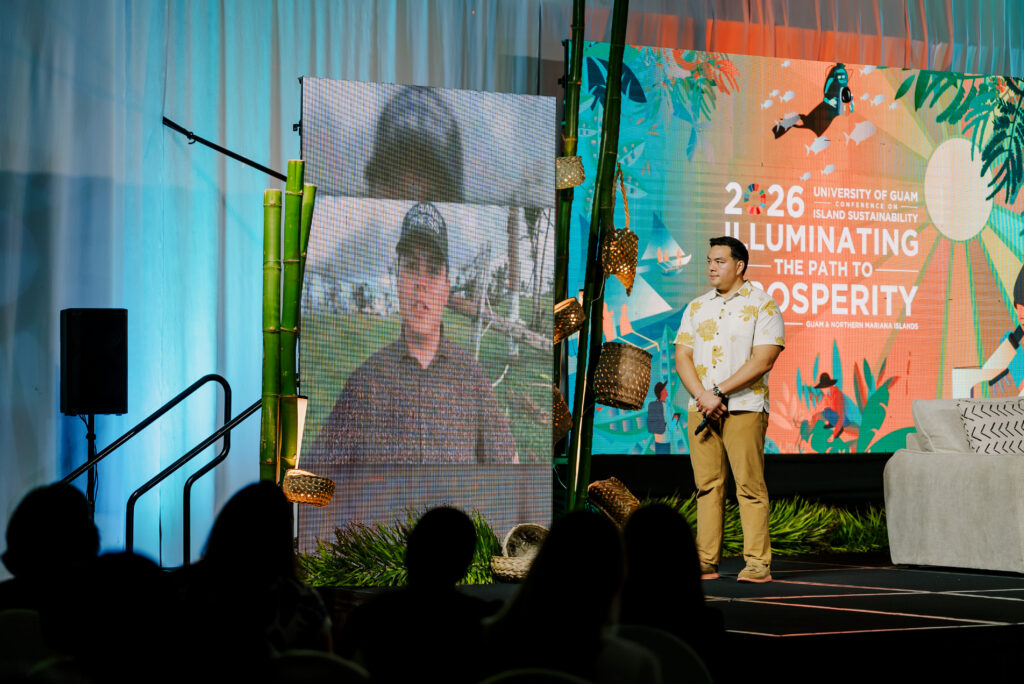
“As I speak to you tonight, the entire island virtually of Saipan and Tinian will still sleep in darkness.”
The stark assessment from Marianas Press founder and journalist Thomas Manglona opened the recovery panel at the 17th University of Guam Conference on Island Sustainability (CIS 2026). In his live update from Saipan, Manglona described widespread power outages, limited access to running water, and hundreds of residents still taking shelter as recovery efforts continued across the CNMI (Commonwealth of the Northern Mariana Islands).
Before reaching the Marianas, Sinlaku had already affected Chuuk and other parts of the Federated States of Micronesia as it moved through the region, bringing early damage and urgent response needs to communities in its path. The system then passed Guam before striking the CNMI, stretching emergency response efforts across multiple island jurisdictions.
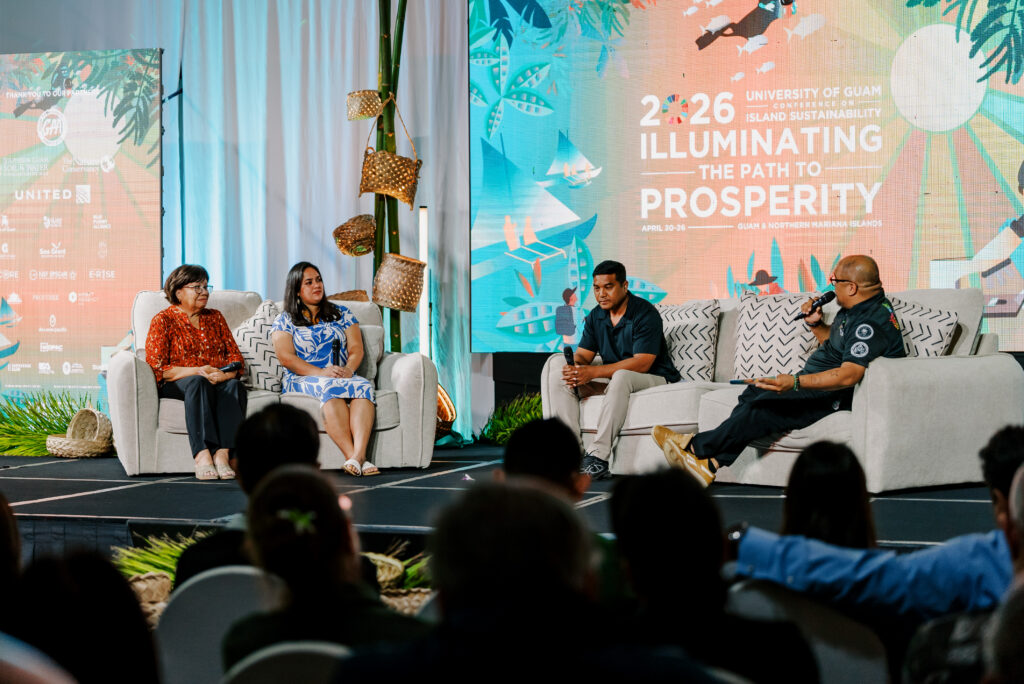
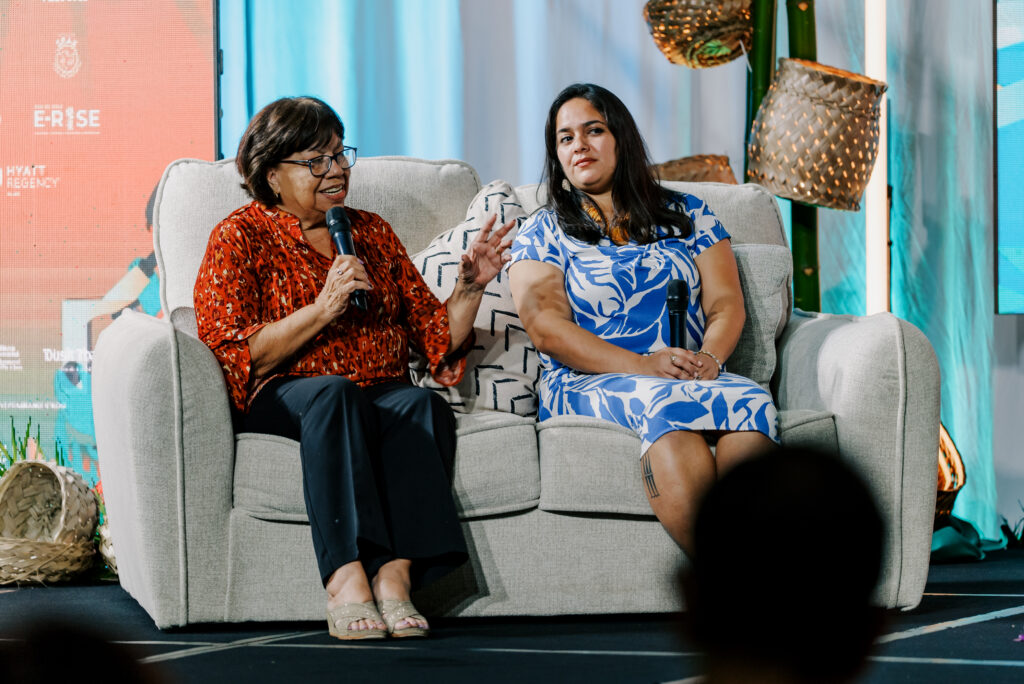
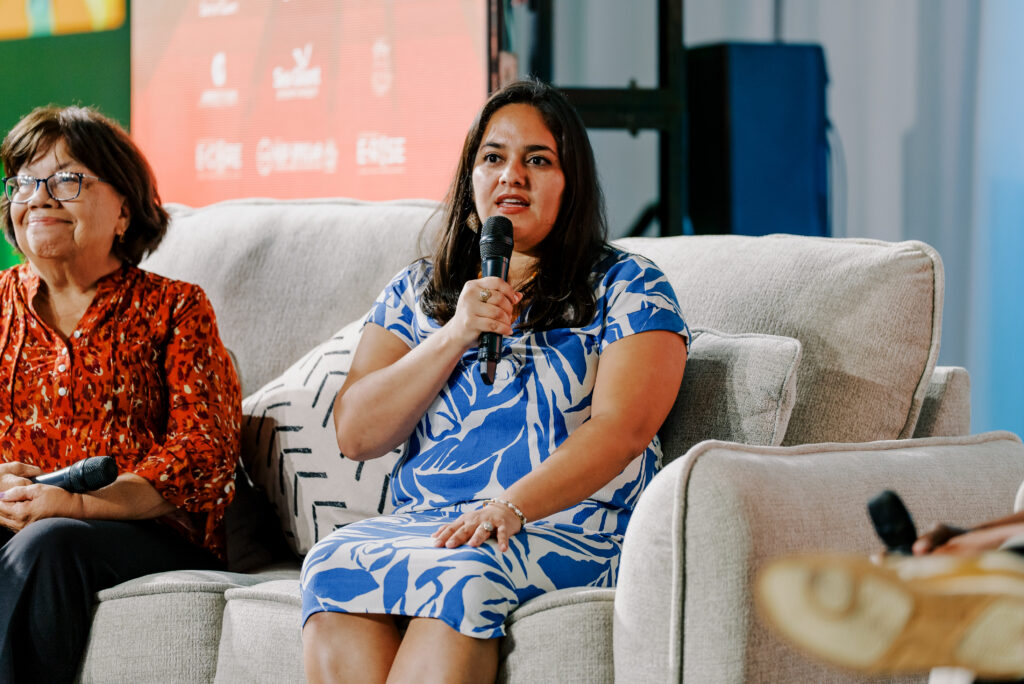
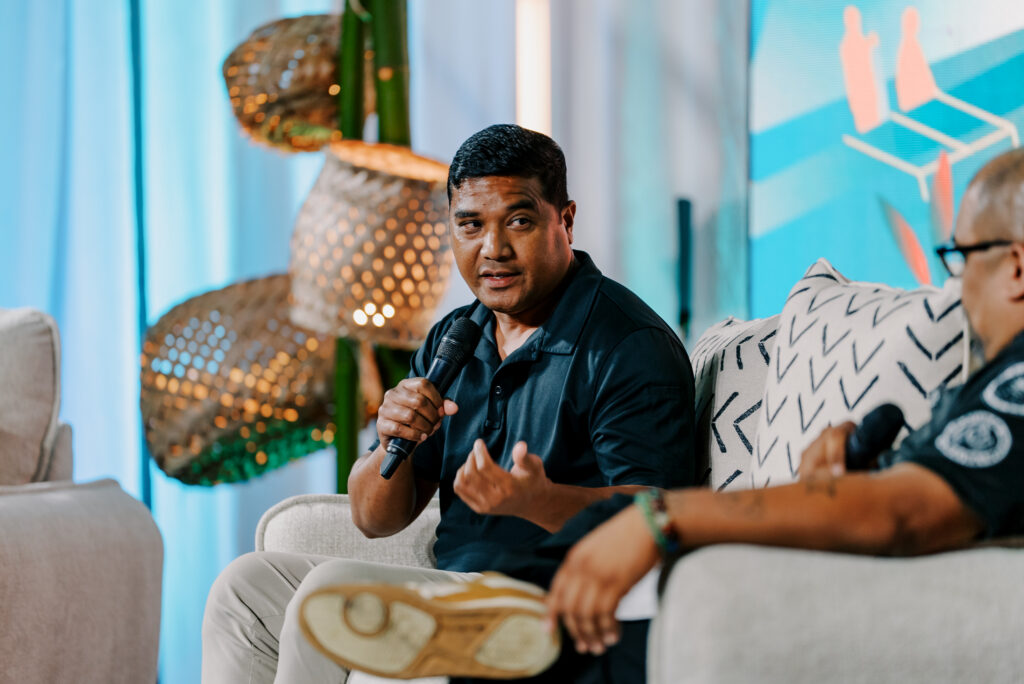
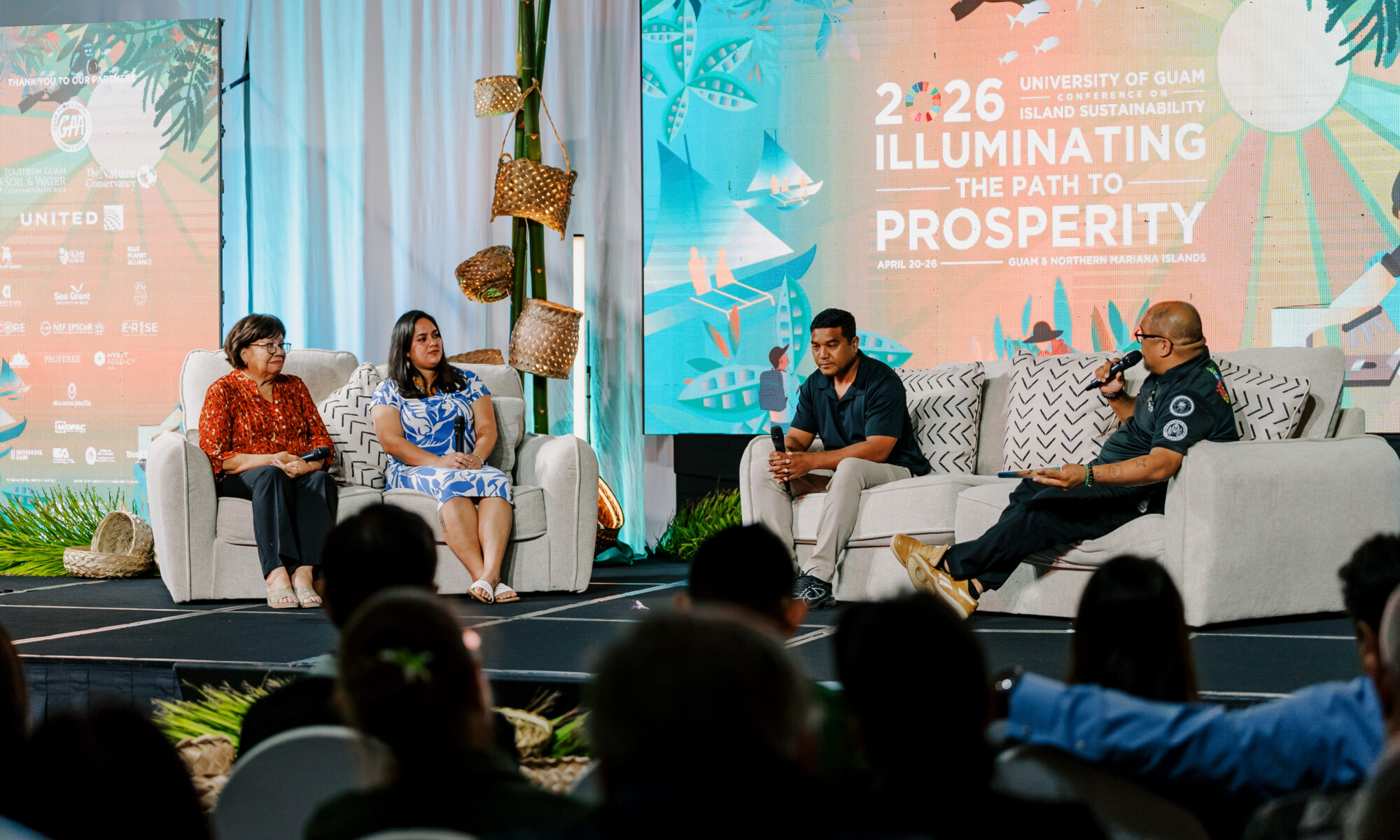
Looking back at these cascading impacts, the Sinlaku recovery panel shared what it was like working on the ground to coordinate relief and recovery efforts. Moderated by Kyle Mandapat, associate director for communications and community engagement at the UOG Center for Island Sustainability and Sea Grant, the panel featured Carlotta Leon Guerrero, executive director of the Ayuda Foundation; Maria Hernandez May, co-director of the Micronesia Climate Change Alliance; and John Howard, president of Foneni Achocho Sensu (FAS).
Mandapat opened the discussion by pointing to the gap between what disasters look like on paper and what they mean in lived experience, and invited the panelists to speak about their ongoing work in the field.
Much of the discussion centered on how community organizations quickly transitioned into full-scale response mode as the storm passed. Leon Guerrero described the immediate logistics needed to move relief supplies and set up distribution systems. “The very first thing that the Ayuda Foundation has learned how to do is, when a disaster hits, the first thing you have to do is get a site,” she said. She explained how a closed school facility was repurposed into a central hub: “It’s a school that was closed down last year, and it’s the perfect site for us. It allows people to drive in and drop off their donation and get right into a container.”
Hernandez May described the scale of coordination across islands and the role of established networks in moving aid quickly. She pointed to systems built over years of organizing that allowed for rapid mobilization even before formal disaster declarations were in place. “We have been bringing together organizers, community organizers, people who are passionate about doing good for their communities since our inception in 2018, together to build solidarity,” she said.
She also spoke about the speed of their response efforts ahead of the storm’s impact. “Before the storm, we were already applying for the rapid response grants. We were already reaching out to all of our networks,” she said, noting that coordination stretched across territories and international partners to track funding and distribute supplies.
Hernandez May described the scale of coordination across islands and the role of established networks in moving aid quickly. She pointed to systems built over years of organizing that allowed for rapid mobilization even before formal disaster declarations were in place. “We have been bringing together organizers, community organizers, people who are passionate about doing good for their communities since our inception in 2018, together to build solidarity,” she said.
She also spoke about the speed of their response efforts ahead of the storm’s impact. “Before the storm, we were already applying for the rapid response grants. We were already reaching out to all of our networks,” she said, noting that coordination stretched across territories and international partners to track funding and distribute supplies.
John Howard of Foneni Achocho Sensu (FAS) described his role as a connector between organizations and affected communities, particularly in Chuuk and the broader FSM diaspora. “So I got a call from or a text message from my friend Miss Carlotta that Ayuda will do a donation to Saipan and Chuuk,” he said. “So I said, okay, I’m here to help. I will help reach out to Chuuk about what essential needs they need, and then I can relate to you.”
Howard explained that much of his work involved relaying updates through community networks and ensuring that needs identified in the islands were communicated quickly to partner organizations. “So that’s my role in this process, just relaying the message to the community to support relief efforts,” he said.
As the discussion continued, panelists reflected on how coordination often happens in real time, shaped by urgent needs rather than formal planning structures. Leon Guerrero described constant communication among partners during the response period. “So when you find somebody and you start to move, and you need to move cargo, and you need to respond, you have to stay in touch,” she said.
Hernandez May also pointed to the efforts of local teams working long hours in affected communities. “Shout out to the food and water distribution teams that are every single day probably 18 to 20 hours, if not more,” she said. “They were up at 5 30 a.m. coordinating water, figuring out where the needs are, going door to door, doing water drops, working with the mayor’s offices.”
Across the panel, speakers returned to a shared theme of locally driven response systems and mutual aid networks that have become central to disaster recovery in the region. From repurposed facilities to cross-island coordination and community-led distribution efforts, the discussion reflected how organizations across Micronesia are continuing to respond as recovery from Sinlaku remains ongoing.
UOG launches Sinlaku relief efforts
Following the recovery panel at CIS2026, UOG President Anita Borja Enriquez, DBA, announced the launch of a coordinated relief effort mobilizing the university community to support affected islands across Micronesia, including Saipan, Tinian, Chuuk, Guam, and Rota, through donations and direct assistance.
The effort includes a goal of filling a 20-foot container with essential supplies such as non-perishable food, bottled water, hygiene and cleaning items, batteries, flashlights, solar lights, tarps, and basic household goods, as well as monetary donations to support the procurement of needed items. For more information on how to donate or get involved, visit the official UOG relief website.