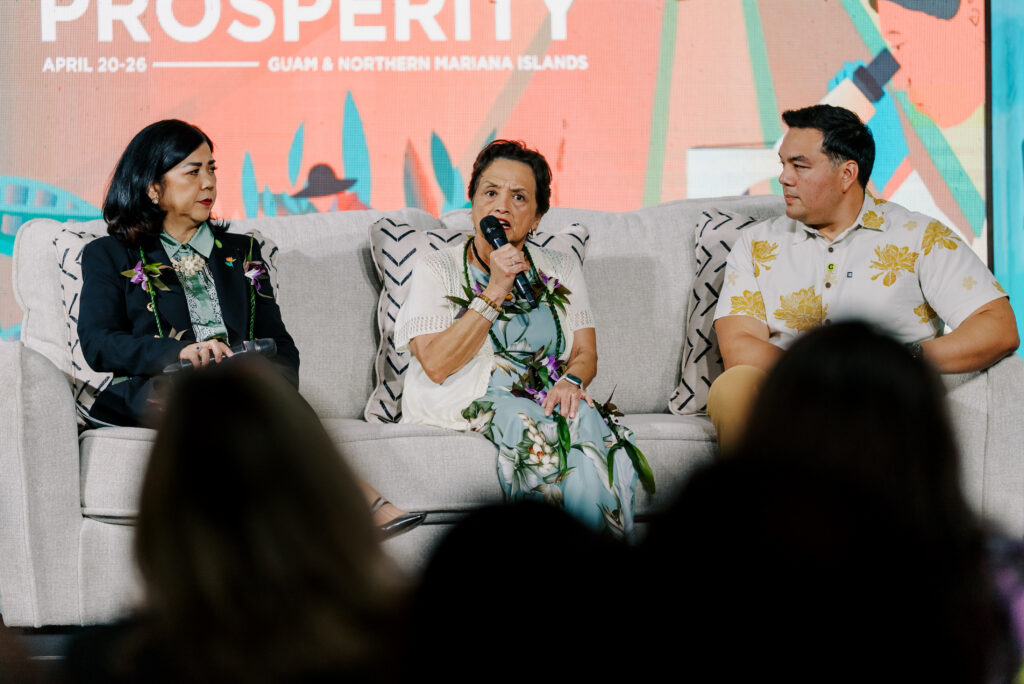
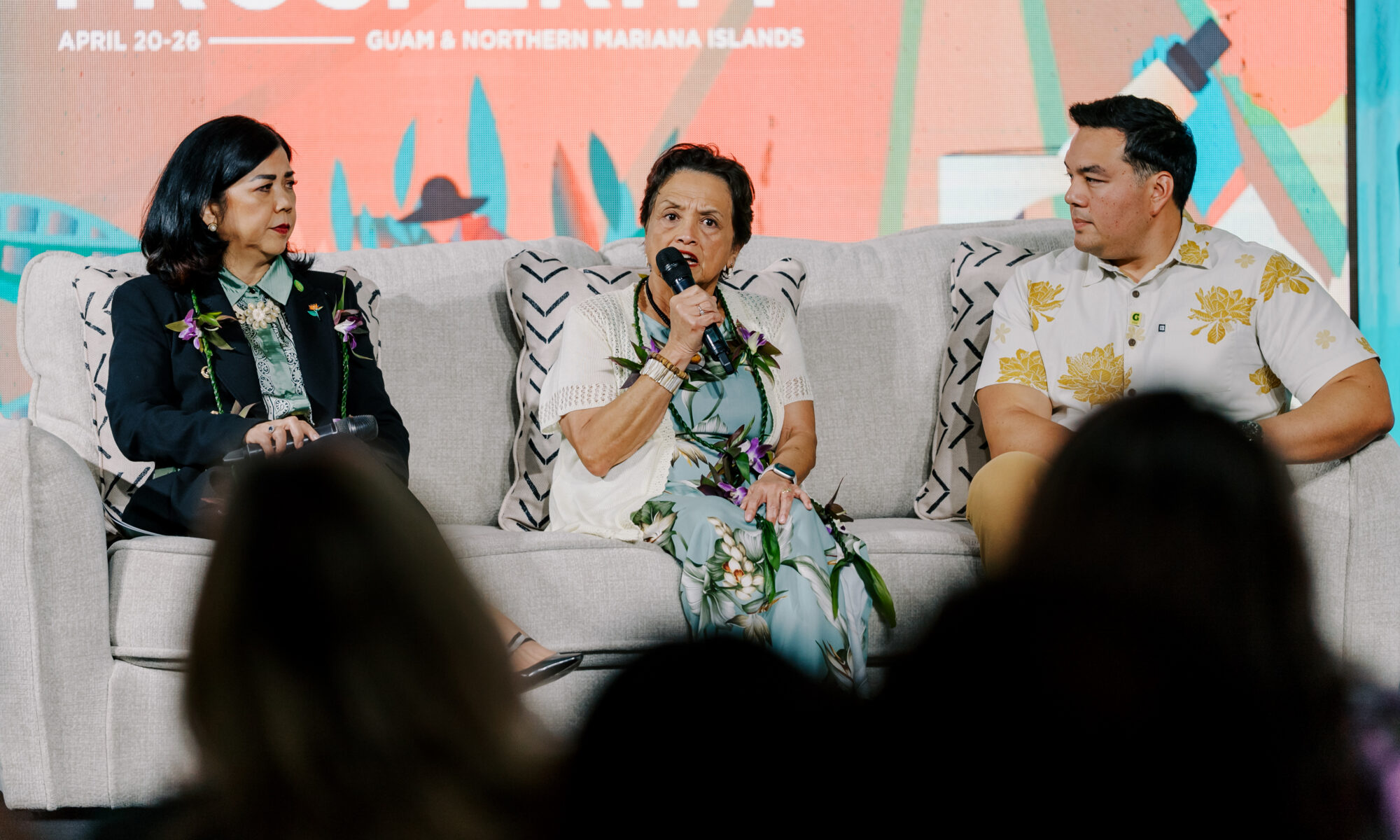
The annual “Conversations with the Conference Co-Chairs” at the formal opening of the 17th University of Guam Conference on Island Sustainability (CIS2026) focused on a timely discussion on island resilience and recovery following Super Typhoon Sinlaku.
Governor Lou Leon Guerrero and UOG President Anita Borja Enriquez, DBA, CIS2026 co-chairs, shared insights on the island’s response and the broader path forward. Moderated by Austin Shelton, Ph.D., director of the UOG Center for Island Sustainability and Sea Grant, the session emphasized how recent experiences are shaping Guam’s approach to preparedness, sustainability, and regional collaboration.
Leon Guerrero described the storm’s intensity and prolonged impact on the Marianas. “70 to 80 miles per hour sustained winds and gusting up to almost 90. And so we actually had been in the storm for close to three days. Can you imagine 185 mile per hour winds bashing your home for three days? This typhoon was very slow moving,” she said. Despite the severity, she pointed to the resilience of island communities, adding, “we become resilient. We return and we rise up as a whole island Marianas… and we’ve had major emergencies.”
She also noted Guam’s rapid recovery as a result of coordinated response efforts. “We’ve recovered actually within two days I would say we had like 90 percent… of our power back, maybe 60 percent of our water,” she said, explaining that within just a few days, essential services were largely restored. The pace of recovery, she indicated, reflects years of planning and investment in systems designed to withstand and rebound from major storms.
Enriquez emphasized the university’s role in ensuring safety and continuity during and after the typhoon, particularly for students living on campus, many of whom come from neighboring islands including the Commonwealth of the Northern Mariana Islands, which was the area most affected by the super typhoon. “The importance of preparation and certainly internal communications and informing our students particularly how to stay in touch, what to monitor,” she said. She added that despite the storm’s impact, “we were able to resume classes this past Monday,” reflecting the university’s readiness and commitment to maintaining operations while supporting its community.