
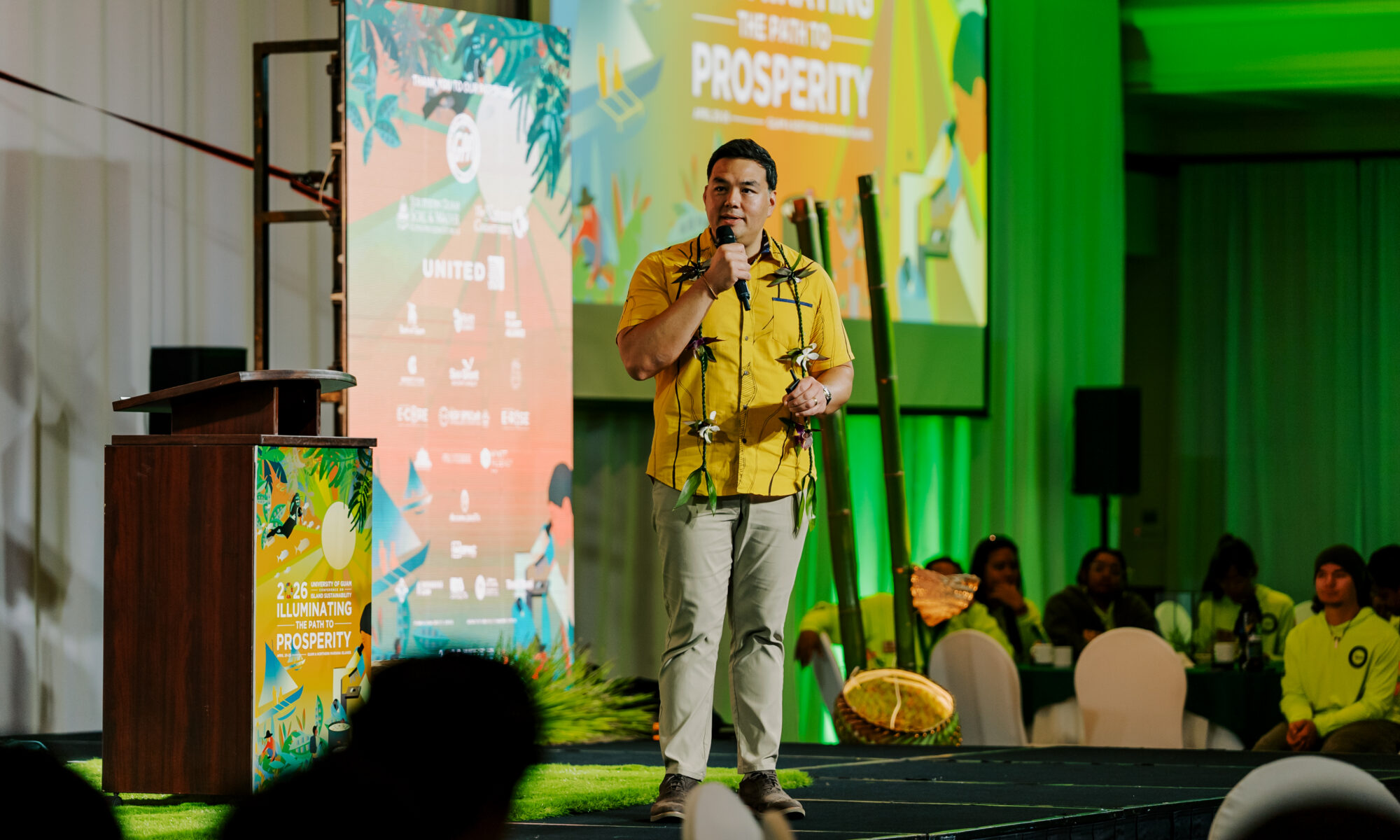
With approximately $1 million in annual local funding, the Guam Green Growth (G3) initiative generated more than $30 million in external funding last year—an over 30-fold return that underscores the value of investing in sustainability programs, according to UOG Center for Island Sustainability and Sea Grant Director Austin Shelton, Ph.D.
“So we always want to make sure that we’re showing a great return on investment,” Shelton said on Thursday at the 17th University of Guam Conference on Island Sustainability.
G3 is a community-driven multi-sectoral partnership that turns island-wide sustainability goals into real action through programs in workforce development, conservation and watershed restoration, education, waste reduction, among others. UOG CIS & SG implements programs and facilitates collaboration with G3.
Another key focus of the presentation was the expansion of sustainable alliances. “We do a lot here locally, but we’re also reaching out to the rest of the world to move some of these efforts forward.” Through G3’s partnerships with regional and global networks such as the Local2030 Islands Network, it has helped support the development of similar initiatives in the Marshall Islands, Palau, and the Commonwealth of the Northern Mariana Islands, all aligned with the United Nations Sustainable Development Goals.
Locally, Shelton also spotlighted circular economy initiatives, particularly the G3 Makerspace & Innovation hub in Hagåtña. The space combines cultural and technical workshops—from traditional knowledge sharing to computer repair—aimed at reducing imports and minimizing waste. One standout project involves recycling plastic into durable materials used to restore damaged school desks following Typhoon Mawar.
Education and outreach remain central to the mission of UOG CIS & SG. Programs like the CHalan Deskubre, a place-based science magazine, and its newly launched educational hub at UOG Dean Circle, are helping shift learning toward local ecosystems, species, and challenges. According to Shelton, these initiatives, alongside classroom visits and outreach events are reaching thousands of students each year and inspiring a new generation of island-based scientists.
Shelton also pointed to advances in food security through aquaculture. Community-based aquaponics systems are being distributed across Guam, enabling families to produce their own fish and vegetables while reducing pressure on marine resources. The integration of locally grown fish into culinary events further demonstrates the viability of sustainable food systems.
Environmental restoration efforts are also gaining momentum. Through tree planting, carbon sequestration studies, and the reintroduction of endangered species, UOG CIS & SG is actively restoring Guam’s ecosystems. Watershed projects alone have led to thousands of trees planted annually, supported in part by innovative partnerships that engage visitors and residents alike.
Workforce development continues to be a cornerstone of Guam Green Growth. The G# Conservation Corps program has expanded significantly, now supporting dozens of participants each year. Over the past five years, Corps members have collected more than 200,000 aluminum cans, planted thousands of trees, and contributed to island-wide cleanup and erosion control efforts. These initiatives not only address environmental challenges but also prepare participants for careers in the emerging green economy.
Shelton also highlighted the “Navigating Home” program, which addresses the long-standing issue of brain drain by supporting students who pursue advanced degrees off-island to return and work in local government agencies. He said by investing in local talent, the program strengthens Guam’s capacity to lead its own sustainability efforts
Shelton also highlighted the growing scale of UOG CIS & SG, which now includes more than 80 team members working across research, education, and community programs. These efforts range from sea turtle research and fisheries management to watershed restoration and workforce development.