
Category: Research
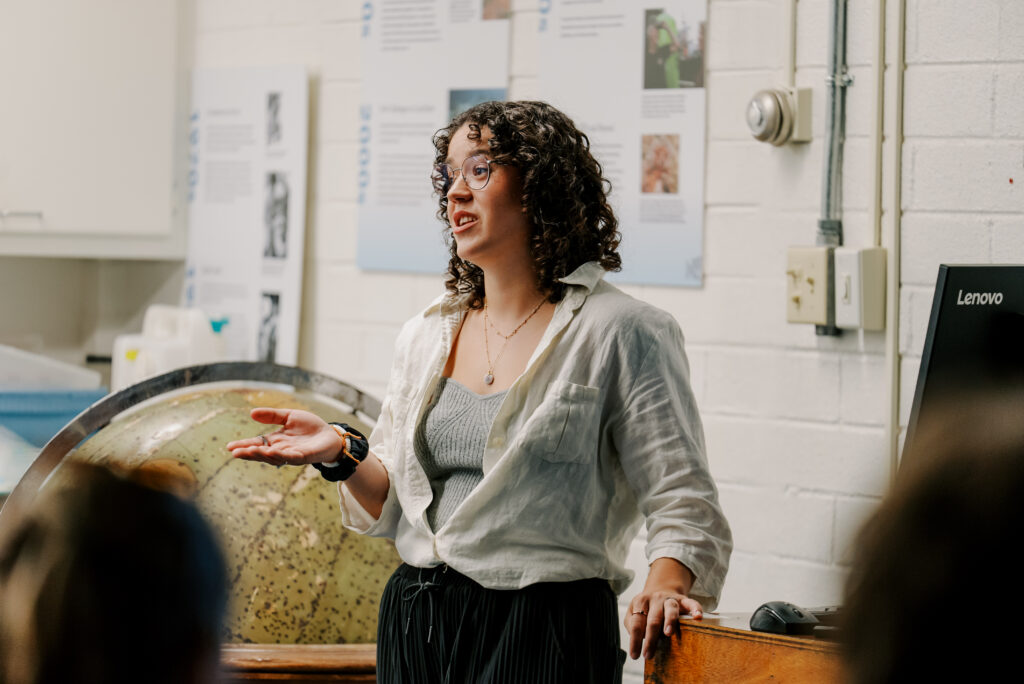
University of Guam NSF EPSCoR Graduate Research Assistant Lauren Kallen defended her Master’s thesis—a research project that represents the first study of its kind on Guam, focusing on understanding the population dynamics of Drupella fragum, a sea snail that feeds on coral tissue and can be found on shallow reef flats around the island.

The University of Guam NSF EPSCoR GECCO Biorepository has partnered with the Department of Invertebrate Zoology at the National Museum of Natural History, Smithsonian Institution, Washington, D.C., for the DNA sequencing of marine organisms.
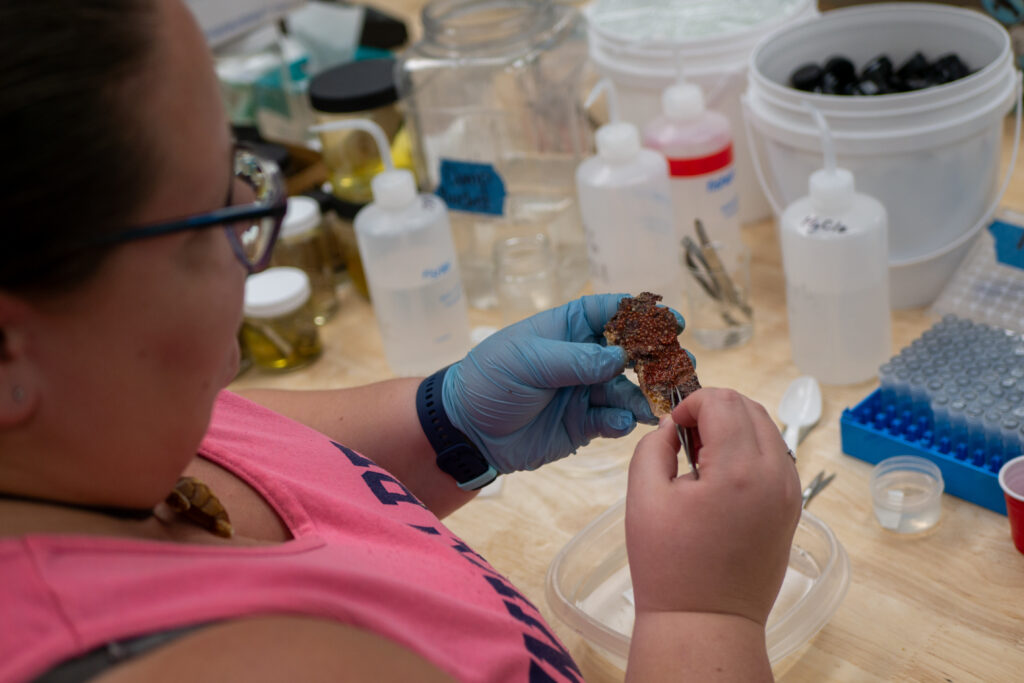
Off the shores of Guam is one of the most complex marine systems in the United States, home to thousands of organisms – many of which are still being documented and identified to this day. The Guam NSF EPSCoR GECCO Biorepository is part of an on-going effort to understand those organisms as well as their habitats.

In preparation for her master's thesis defense this summer, Anela Duenas, a Guam NSF EPSCoR graduate assistant, presented her proposal, “Ecophysiology of Coral Species Replacement on Reef Flats of Guam,” that examines the relationship of the microalgae Symbiodiniaceae with reef-building corals Acropora pulchra and Pavona decussata.

Insights into reproductive trends, predation patterns, and climatic triggers observed before a crown-of-thorns (COTS) outbreak are crucial for developing effective mitigation strategies to protect coral reefs, according to Ciemon Caballes, Ph.D., a senior research associate at the University of Guam's NSF EPSCoR.
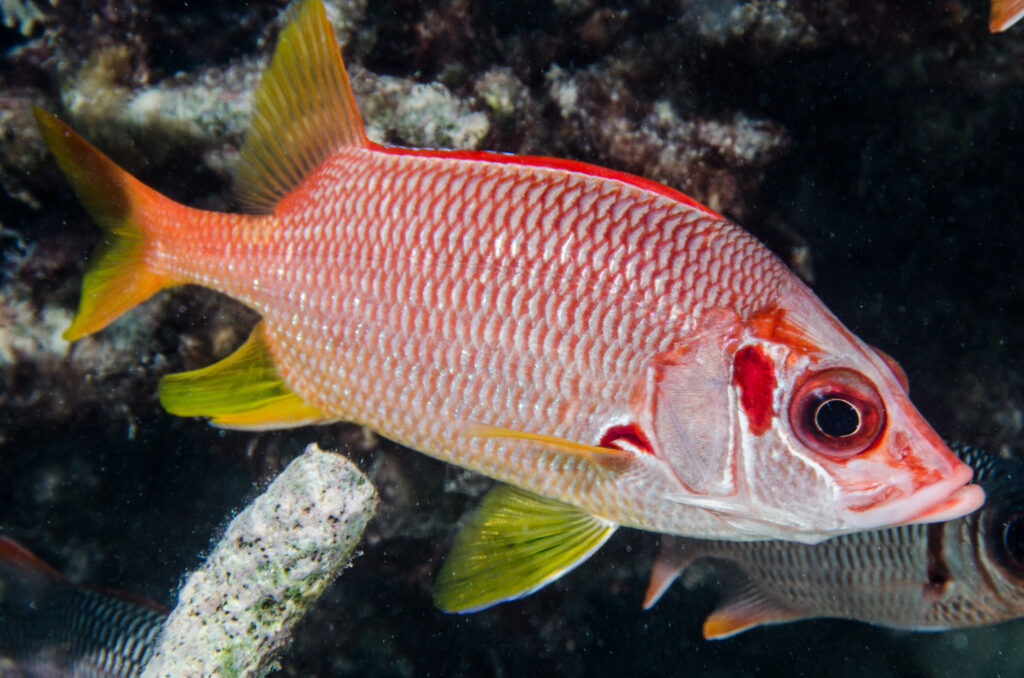
University of Guam Professor of Ichthyology Terry Donaldson recently co-authored a paper on bioacoustic communication within the family Holocentridae, a group of marine fishes commonly known as squirrelfishes and soldierfishes. These fishes are known to communicate by sound production. The paper, “Sounds as taxonomic indicators in holocentrid fishes,” was a collaboration with Marine Banse, Eric Parmentier and Estrelle Bertimes (University of Liege, Belgium), David Lecchini (PSL University, French Polynesia), and Frederic Bertucci (University of Montpelier, France).